




Lifting Electromagnets For Sale
Magnet Type:
Round lifting electromagnet
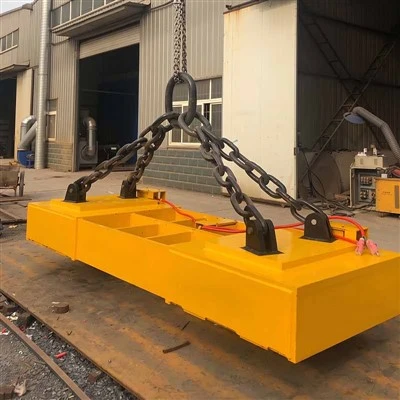
Rectangular lifting electromagnet
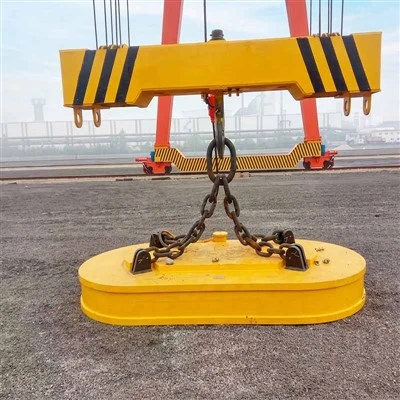
Oval lifting electromagnet
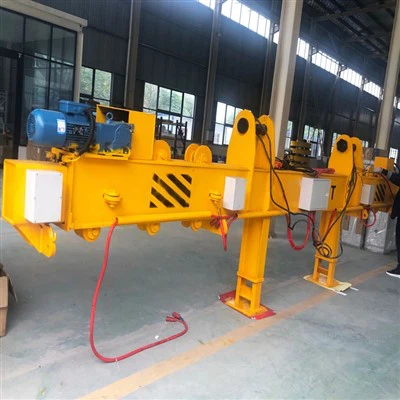
Electromagnetic lifting beam
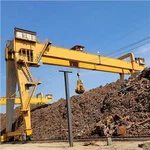
Lifting electromagnets pick up ferrous loads where hooks, slings and mechanical grabs slow the handling cycle or cannot obtain a practical hold. The product range covers loose scrap, plate, billet, rail, bar and bundled steel. Round, rectangular and oval magnets are supplied as single lifting units or as part of an electromagnetic lifting beam.
The magnet face must suit the load before capacity is considered. A worn, scaled plate does not behave like clean flat steel. A bundle leaves air gaps. Hot stock imposes a separate thermal duty. These conditions govern the magnet body, coil system, suspension and control arrangement.
Magnet Types and Typical Loads
|
Magnet Type |
Typical Material |
Working Characteristic |
|
Round lifting electromagnet |
Scrap, turnings, cast returns and irregular ferrous pieces |
Collects uneven material across a circular magnetic face |
|
Rectangular lifting electromagnet |
Plate, billet, slab, bloom, section and machined block |
Provides a defined contact zone for regular workpieces |
|
Oval lifting electromagnet |
Rail, bar, round steel, tube and long profiles |
Follows the direction of elongated material |
|
Electromagnetic lifting beam |
Long plate, rail, billet, bundle and flexible load |
Places several magnets along the load to spread the lifting force |
Product Configuration
|
Feature |
Available Arrangement |
Practical Purpose |
|
Magnet body |
Round, rectangular or oval |
Matches the magnetic face to the form of the steel |
|
Lifting method |
Single magnet or electromagnetic lifting beam |
Uses one or several magnetic lifting points |
|
Temperature duty |
Ambient-temperature or heat-resistant version |
Covers normal steel handling and elevated-temperature workpieces |
|
Control system |
Single, grouped or independent magnet control |
Allows the operator to work with different load lengths and layouts |
|
Suspension |
Hook-mounted, multi-point or beam-mounted |
Connects the magnet system to the crane and distributes the load |
|
Electrical equipment |
Rectifier, control panel and flexible power cable |
Supplies and controls the DC excitation circuit |
|
Magnetic face |
Pole layout selected for the material profile |
Supports contact with plates, billets, rails, bars or scrap |
Lifting performance is determined against the declared load condition. Material grade, section size, surface scale, air gap, temperature, stacking method and magnet layout all influence the magnetic holding force.
Round Lifting Electromagnets for Scrap Handling
A round magnet is used where the load has no consistent contact surface. Scrap piles, turnings and mixed steel pieces present gaps in every direction; the circular pole face is intended for this condition. The working face is selected with wear in mind, particularly where the magnet is lowered repeatedly into abrasive scrap.
Scrap handling also depends on release. Residual magnetism, small-piece retention and the time needed to clear the load affect the handling cycle as much as the initial pick-up. The magnet, rectifier and cable should therefore be specified as one circuit rather than as separate items.

Rectangular Lifting Electromagnets for Plate and Billet
Rectangular magnets are used when the steel provides a longer, more regular contact area. Plate and billet handling is the usual case. Magnet length, pole spacing and suspension position are set against the workpiece, not merely against its weight.
For plate, thickness and surface condition matter. For stacked plate, gaps between sheets reduce the effective magnetic path. Long material may require two or more magnets. Where deflection is a concern, a lifting beam gives the crane several controlled lifting points instead of relying on one central magnet.

Oval Lifting Electromagnets for Rails, Bars and Rounds
Oval lifting electromagnets are intended for steel with a pronounced length-to-width ratio. Rails, round bar and tubular stock do not make efficient use of a circular magnetic face. The oval body extends the working area in the same direction as the material.
The relevant details are the profile section, the length of the load, whether the material is loose or bundled, and the required lifting orientation. In a bundle, the magnet must act through the gaps between individual pieces; this condition must be allowed for in the rated duty.

Electromagnetic Lifting Beams for Long Loads
Multiple magnetic units are installed on the rigid main structure of electromagnetic lifting beams. The equipment is primarily applied for the handling of elongated steel workpieces, including steel plates, rails, billets and bundled materials, which require multi-point support throughout the lifting process.
Equipment design focuses on operational stability rather than simple magnetic configuration integration. It effectively avoids localized load concentration at single contact points during material handling. Structural parameters including beam overall length, magnet installation spacing and suspension geometry are fully optimized according to actual on-site working conditions.
Centralized magnetic control adapts to cyclic handling of workpieces with fixed and uniform specifications. Separate independent control is applicable for workpieces with variable lengths. It also supports selective deactivation of partial magnetic units to accommodate diverse lifting requirements.

Ambient-Temperature and Heat-Resistant Magnets
Standard ambient-temperature magnetic units are applicable for workpiece handling after materials cool down to the qualified operating temperature range. Heat-resistant magnetic configurations are adopted for workpieces retaining residual processing heat, or equipment exposed to long-term radiant heat in operational environments.
Heat-resistant magnetic systems feature comprehensive structural upgrades instead of merely external nameplate adjustment. Coil insulation performance, thermal shielding structure, cable configuration and allowable working duty are all calibrated to match actual workpiece temperature and handling cycles. Maximum workpiece temperature and heat exposure duration serve as essential bases for model selection.

Information for a Quotation
Technical confirmation requires key project parameters, including workpiece material specifications, overall dimensions, maximum lifting temperature, handling mode, matched crane capacity, on-site power supply conditions and operational frequency. All above parameters support accurate configuration of magnet type, heat resistance grade, lifting structure and supporting control system.
FAQ
Which lifting electromagnet suits scrap handling?
When should a rectangular magnet be selected?
What function does an electromagnetic lifting beam serve?
This type of beam arranges magnetic units across the length of long workpieces. It delivers improved support for plates, rails, billets and bundled stock, while lowering the chance of excessive deflection in transit.
Can a standard magnet lift hot steel workpieces?
No. Magnet selection must match the rated temperature of the workpiece. Hot lifting applications demand a heat-resistant build, equipped with suitable coils, insulation, cabling and duty cycle ratings.
Does a single rated capacity fit all steel lifting tasks?
No. Holding force varies according to workpiece material, cross-section, surface finish, air gap, temperature, stacked layers and magnet layout. Rated performance values are only valid under defined load conditions.
What electrical components come supplied with a lifting electromagnet?
The full lifting set includes the magnet or lifting beam, matched rectifier and control panel, power cabling, alongside electrical connection hardware mounted to the crane.
Request a Matched Lifting System
Select the lifting system from the material and the working condition. The required result is a stable magnetic hold, an appropriate release cycle and a crane connection suited to the duty.
Hot Tags: lifting electromagnets for sale, China lifting electromagnets for sale manufacturers, suppliers, factory, Circular Lifting Magnets, Excavator Electromagnet, Excavator Grab Bucket, Excavator Lifting Magnet, Magnet By Types, Round Lifting Electromagnet
You Might Also Like



Send Inquiry