


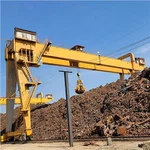

Electromagnet
Electromagnet
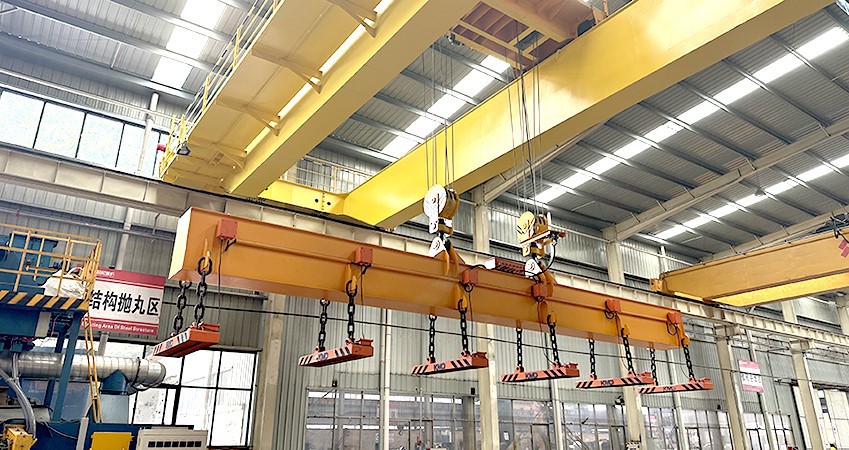
Electromagnet
The electromagnetic hoisting devices used in cranes are indispensable efficient handling tools in modern industries such as steel, metallurgy, casting, ports, and waste recycling. It utilizes controllable electromagnetic force to achieve non-contact, rapid grasping and release of ferromagnetic materials. Its core value lies in efficiency, ease of operation, and non-destructiveness to the materials. With the development of technology, special electromagnetic hoisting devices such as high-temperature types are also constantly emerging to meet more complex and demanding industrial requirements.
Efficient And Rapid
Significantly reduce loading and unloading time and enhance operational efficiency.
Easy To Operate
It can be controlled by entering the crane cab or using the remote control.
Wide Applicability
Can handle various shapes and sizes of ferromagnetic materials.
Adjustable Suction
By controlling the current intensity, the suction force can be adjusted within a certain range.
Kinocranes Electromagnet
Kinocranes Magnetic crane(Electromagnet) is a specially designed crane for lifting and transferring metal, which is a kind of steel mill crane. It is an electric overhead crane with lifting electromagnet that handles metal loads. which is widely applied in steel mill such as steel scrap yard, furnace shed, finished yard, etc. Electromagnetic cranes or magnetic cranes can be customized for your application.
Kinocranes is a professional manufacturer of electromagnets,Kinocranes makes tailored design for our end crane user to realize the maximum working efficiency.
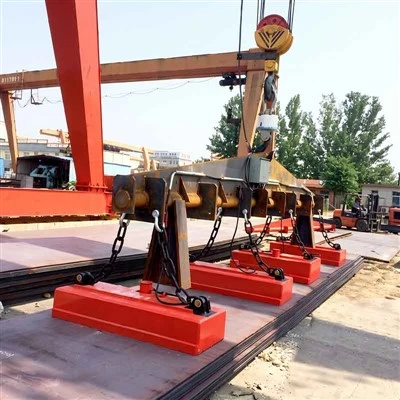
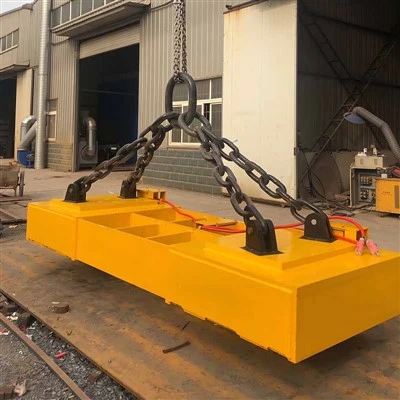
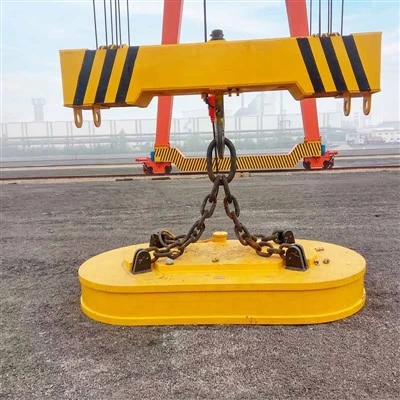
Electromagnet Types
Selecting the appropriate electromagnetic crane hook and using and maintaining it correctly are the key to ensuring safe production and improving work efficiency.

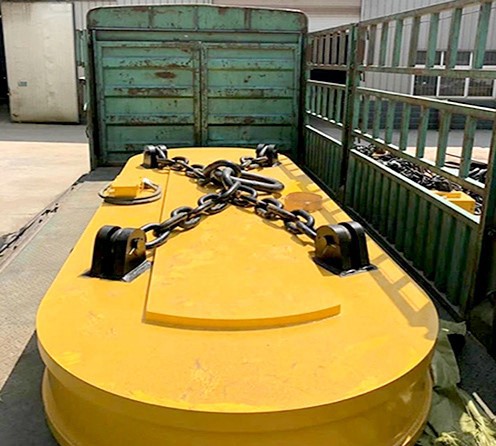


Products
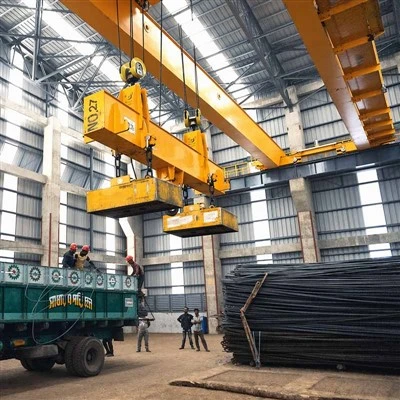




Lifting Magnet FAQ Content
CATEGORY 1: Selection & Technology
Q: What is a lifting magnet and how does it work?
A: A lifting magnet counts as material handling equipment. It uses magnetic pull to lift, fasten and move ferrous metal including steel plates, billets, slabs, pipes and scrap. It takes the place of standard slings and hooks; allowing single-operator control with faster load attachment and release.
Three core working principles exist:
- Permanent lifting magnets equip NdFeB rare-earth magnets within steel casing. Hand crank rotation drives inner magnet core to align or displace magnetic flux on the carried workpiece. In the ON position, flux passes through the load and holds it. In the OFF position, the flux is short-circuited inside the housing and the load releases. No external power is required.
- Electromagnetic lifting magnets generate a field by passing DC current through a coil wound around a steel core. Power on — magnet holds. Power off — load releases. They are typically suspended from crane beams and powered through a cable reel or busbar system, and are the standard choice for steel mills and scrap yards.
- Electro-permanent lifting magnets combine both. A brief DC pulse (1–3 seconds) magnetizes or demagnetizes the internal permanent magnet blocks. Once set, no holding current is needed. This eliminates the risk of load drop during power failure while retaining remote on/off control.
Q: What are the types of lifting magnets?
A: Lifting magnets fall into three groups by magnetic source and control style.
- Permanent lifting magnets — standalone devices with no power hookup. Single unit capacity ranges 100 kg – 6,000 kg. Common at fabrication, warehouse and machining sites to handle flat steel sheets and round bars.
- Electromagnetic lifting magnets — run on DC power fed from rectifier control cabinets. Two main shapes: rectangular for plates and billets, circular for scrap and coils. Unit capacity spans 1 t up to over 30 t. Several units may fit onto spreader beams to lift extra-wide or lengthy materials. Widely used across steel plants, foundries, shipyards and dock terminals.
- Electro-permanent lifting magnets — short electric pulses switch their built-in permanent magnets on and off. No ongoing power needed once magnetized for holding loads. Capacity: 500 kg – 20 t. More customers pick these for precision metalworking, ship construction and automated production lines.
| Parameter | Permanent | Electromagnetic | Electro-Permanent |
|---|---|---|---|
| Power supply | None | Continuous DC | Pulse only (1–3 s) |
| Backup power | Not required | Battery backup recommended | Not required |
| Max. capacity per unit | ~6 t | 30 t+ | ~20 t |
| Typical application | Shop floor, small plates | Steel mill, scrap yard | Fabrication, shipyard |
| Control | Manual lever | Remote / PLC | Remote / PLC |
Q: What is the difference between permanent and electromagnetic lifting magnets?
A: Their core gap comes from magnetic field generation and control modes, which directly impact safety rating, load capacity and applicable scenarios.
- Power supply. Permanent magnets need no electricity; operators turn a manual lever to switch magnetism. Electromagnets rely on steady DC power from cable reels, busbars or generators. Without backup batteries, sudden power cuts will wipe out magnetic holding force entirely.
- Capacity range. Permanent magnets: 100 kg – 6,000 kg. Single electromagnet unit: 5 t to over 30 t; grouped magnets fitted on spreader beams can lift loads of 50 tons and above.
- Surface requirements. Permanent magnets need flat, clean contact with a minimum plate thickness (typically 6 mm+). Air gaps from rust or paint reduce holding force significantly. Electromagnets generate deeper flux penetration and tolerate rougher surfaces and thinner plates.
- Control. Permanent magnets require manual engagement at the load. Electromagnets can be switched remotely from the crane cabin or control room, enabling faster cycle times and PLC integration.
- Safety on power loss. This is often the decisive factor. Permanent magnets retain full holding force regardless of power status. Electromagnets release the load unless equipped with a backup battery and controller. For outdoor yards, mobile cranes, or facilities with unstable supply, permanent or electro-permanent magnets are the safer choice.
- Maintenance. Permanent magnets require periodic inspection of the contact surface and handle mechanism. Electromagnets need regular inspection of coils, cable reels, junction boxes, and the rectifier panel — coil insulation degradation is the most common failure mode.
Q: How much weight can a lifting magnet hold?
A: Rated capacity depends on magnet type, size, and workpiece conditions:
| Magnet Type | Capacity Range (per unit) | Typical Power |
|---|---|---|
| Permanent, manual | 100 kg – 6,000 kg | None |
| Electromagnetic, rectangular | 1 t – 30+ t | DC 220V |
| Electromagnetic, circular | 2 t – 20+ t | DC 220V |
| Electro-permanent | 500 kg – 20 t | Pulse DC |
Two critical factors determine actual holding force in the field:
Safety factor. Manufacturers rate magnets with a built-in safety factor — typically 3:1. A magnet rated at 2,000 kg has been tested to hold at least 6,000 kg before release. Always select based on rated working load, not breakaway (test) force.
Workpiece conditions. Rated capacity applies under test conditions — flat, clean, mild steel at a defined minimum thickness. The following reduce actual holding force:
- Plate thickness below the rated minimum
- Surface air gaps from rust, paint, oil, or scale
- Low-permeability materials (high-alloy and stainless steels)
- Reduced contact area (round bars, pipes, irregular shapes)
For multi-magnet configurations on a spreader beam, total capacity equals the sum of individual ratings, provided the beam maintains proper load distribution.
CATEGORY 2: Application & Performance
Q: How to choose the right lifting magnet for steel plates?
A: Steel plate handling is the most common application. Selection comes down to four field conditions:
1. Plate thickness. Thin plates (under 6 mm) do not provide sufficient flux path depth for most permanent magnets. For 3–6 mm plates, electro-permanent magnets with optimized pole spacing are recommended. For 6 mm and above, permanent or electromagnetic magnets both work. Always verify the manufacturer's minimum thickness rating.
2. Material and surface. Standard carbon steel (Q235, Q355, A36, S275) works well with all magnet types. Galvanized, painted, or rusty surfaces reduce holding force by 10–40%. Austenitic stainless steel (304, 316) is essentially non-magnetic and cannot be lifted with standard magnets.
3. Lifting orientation. Horizontal lifting achieves full rated capacity. Vertical lifting (plate on edge) reduces capacity by approximately 50% due to reduced contact area. For vertical plate turning, use magnets rated for side-pull loading or a multi-point fixture.
4. Environment. Indoor shops with stable power — any type. Outdoor stockyards or mobile cranes — permanent or electro-permanent magnets that don't depend on continuous power. High-temperature environments above 80°C require heat-rated magnet grades (standard NdFeB force degrades above this threshold; heat-resistant models handle up to 200°C).
Q: How to choose a heavy duty lifting magnet for industrial applications?
A: Heavy duty working scenarios including steel mills, foundries, shipyards and port terminals need magnets capable of continuous operation amid tough working conditions.
- Duty cycle and thermal rating. Standard electromagnets are rated ED-50% (50% on / 50% off). For continuous scrap loading or slab transfer, specify ED-60% or ED-75% with Class F or Class H coil insulation. Exceeding the rated duty cycle causes overheating and premature coil failure.
- Spreader beam configuration. For loads over 10 tons, a multi-magnet array on a spreader beam is standard practice. Example: four 7-ton electromagnetic chucks on a 12-meter spreader beam can handle a 12 m × 2.5 m steel plate up to 28 tons. The beam must maintain even load distribution.
- Crane compatibility. The crane must cover the total hook load — workpiece + magnets + spreader beam + cable reel + power feed. Example: 20 t plate + 4 t beam + 3 t magnets + 1 t cable reel = 28 t hook load. Specify the crane accordingly with proper safety margin.
- Control integration. For automated systems, the magnet controller must interface with the crane PLC (signals: on/off, current monitoring, load detection, battery status). Kinocranes supplies rectifier panels with Modbus, Profibus, or Ethernet/IP interfaces as part of the complete electromagnetic crane package.
Q: Can lifting magnets be used for scrap metal handling?
A: Yes — scrap handling has been a standard application for electromagnetic lifting magnets in steel mills and recycling facilities for decades.
Circular electromagnets (MW5 series and similar) are the industry standard. Their deep-field round design penetrates irregular, tangled scrap loads where flat contact is impossible — unlike plate-handling magnets that require smooth surfaces.
Key considerations:
- Duty cycle. Scrap handling is high-frequency, continuous work. Specify ED-50% minimum; ED-60% or ED-75% for continuous furnace charging.
- Heat resistance. Standard magnets: up to 80°C ambient. For hot scrap up to 200°C, specify heat-resistant coil insulation and a heat shield plate. For furnace-charging near melting furnaces, cast aluminum housings with forced-air or water-cooling are available.
- Crane configuration. A typical scrap yard crane carries an electromagnetic chuck (MW5-70L, MW5-110L), a motorized cable reel, a rectifier panel (AC 380V → DC 220V), and a generator for mobile cranes. Kinocranes provides these as integrated electromagnetic crane packages.
- Actual scrap capacity. The magnet's pickup for scrap is typically 15–30% of its flat-steel rating, depending on scrap type — shredded scrap achieves higher density, mixed structural scrap lower.
Q: What is a battery-powered lifting magnet and when to use it?
A: A battery-powered lifting magnet combines rechargeable battery packs, control parts and permanent or electro-permanent magnets into a single unit. It requires no external power supply, cable reels or wired controls.
When to use:
- Outdoor and remote sites — construction, bridge jobs and pipeline yards with no available power. It fits onto standard cranes, excavators or forklifts directly.
- Multi-bay workshops — shift between different lifting machines with no extra wiring or separate cable reel setup.
- Temporary and rental projects — ready for immediate use without any site electrical work.
Typical specs: capacity 1–10 t, working runtime 8–12 hours, regular charging takes 4–6 hours; fast charging finishes in 2 hours, working temperature spans -20°C to +50°C.
Limitations. Currently limited to moderate capacities (under 10 t). For steel mill operations requiring 20+ t and continuous ED-60% duty, cabled electromagnetic systems remain the standard. Battery magnets also add dead weight that must be factored into crane capacity.
CATEGORY 3: Business & Purchasing
Q: What are electro-permanent lifting magnets and why choose them?
A: Electro-permanent lifting magnets use NdFeB permanent magnet blocks that are magnetized or demagnetized by a short electrical pulse (1–3 seconds) through an embedded controller coil. Once set, the magnets hold indefinitely without any power consumption.
Why buyers choose this technology:
- Fail-safe operation. Power failure does not release the load. The permanent magnet blocks retain their field without holding current — no battery backup required. For overhead public areas, expensive workpieces, or hazardous loads, this is the highest safety level available.
- Energy efficiency. Power is consumed only during the magnetization/demagnetization pulse. Over an 8-hour shift, a 5-ton unit uses less than 0.5 kWh. A comparable electromagnet consumes 3–5 kW continuously — 24–40 kWh over the same period. The cost difference multiplies across multiple units.
- Thin plate capability. Narrow pole spacing and controlled flux density make electro-permanent magnets effective for plates as thin as 3 mm — where standard permanent magnets cannot achieve reliable holding force. Relevant for sheet metal fabrication, automotive, and appliance manufacturing.
- Remote and automated control. Compatible with PLC, wireless remote, and push-button pendant — suitable for automated crane systems, CNC integration, and robotic handling where manual permanent magnets cannot operate.
- Trade-off. Higher unit price than conventional permanent magnets due to the embedded controller. For light-duty, low-frequency applications, standard permanent magnets may be sufficient. For safety-critical or automated operations, the electro-permanent magnet delivers clear ROI.
Q: Where to buy lifting magnets and how to choose a manufacturer?
A: Selecting a supplier is a technical decision. The magnet must be matched to your material, crane, and operating conditions — and the manufacturer must back it with engineering support.
What to look for:
Engineering capability. Can the factory perform application-specific calculations — magnetic circuit design, force analysis, thermal rating for your duty cycle? A supplier who only catalogs standard models without engineering analysis is a reseller, not a manufacturer. Request calculation sheets or FEA reports as part of the quotation.
Product range and customization. The factory provides full product scope: permanent magnets, electromagnetic chucks in rectangular and circular styles, electro-permanent magnets, battery-powered devices and integrated control systems. Custom spreader beams, non-standard pole spacing and special temperature ratings are produced internally.
Certifications and testing. ISO 9001 minimum. For steel mill electromagnetic cranes, CE certification and FEM/DIN compliance indicate recognized engineering standards. Every magnet should ship with a test report — rated lifting force, breakaway force, insulation resistance, and coil resistance. Request a sample report before ordering.
Export and after-sales support. For international buyers: sea freight packaging, customs documentation, and remote technical support for installation and commissioning. Kinocranes has exported lifting magnet systems to over 30 countries with installation supervision, operator training, and spare parts supply.
Information to prepare for a quotation:
1. Workpiece material, dimensions, and weight range
2. Surface condition (machined, painted, rusty, oily)
3. Lifting orientation (horizontal, vertical, or both)
4. Crane type and rated capacity
5. Duty cycle and daily operating hours
6. Ambient temperature range
7. Available power supply (voltage, frequency, phase)
With this information, a qualified manufacturer can engineer the correct specification and deliver an accurate quotation within 2–3 working days.
Send your project technical inquiries and quotation demands to Kinocranes engineering team: eric@kinocranes.com.
About Us
Kinocranes Group was founded in 2008 and Kinocranes integrate lifting equipments' research and development, manufacturing, sales, installation and service. We providing one-stop service for lifting equipments.
Professional team
We have more than 1200 employees, among which there are more than 180 engineers and technicians. The factory area is about 280 acres.
Service: 7*24honline
We have exported our cranes to more than 30 countries and regions. We have established long term cooperation relationship with each customer. We have a professional and thoughtful sales and service team, and strive to provide customers with customized products.

210Set
Production testing equipment
280
Acres of factory area
180+1200
180 engineering and technical personnel, more than 1,200 employees
108.8 million
108.8 million yuan of registered capital.
Click the button and get in touch with us immediately.
Our address
#23-03 HIGH STREET CENTRE SINGAPORE (179094)
Phone Number
+65 8376 6454
sale@kinocranes.com
