


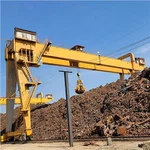

Aerial Work Platform
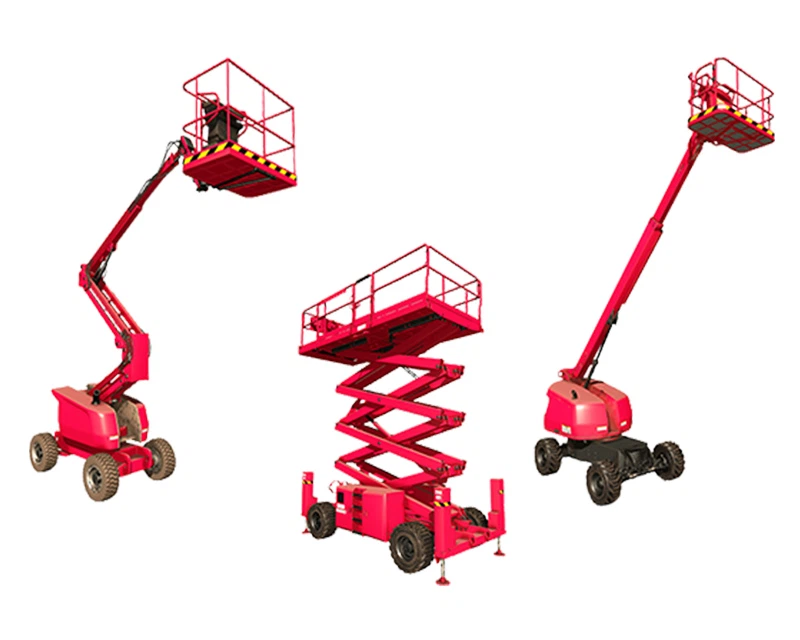
Kinocranes Series Of Aerial Work Platforms
Kinocranes Aerial Work Platforms are advanced mechanical equipment specially designed to meet the requirements of high-altitude operations in modern industries, construction, facility maintenance, logistics warehousing, and large-scale events. We offer a full range of products, including Scissor Lifts, Boom Lifts - Articulating & Telescopic, Spider Lifts, and Mast Lifts, covering various application scenarios ranging from indoor precision operations to outdoor complex conditions.
Cost effective
Exquisite quality
Professional Team
One Stop Solution
Strong power drive
Electric/diesel/hybrid options available, with strong climbing ability.
Stable structure
Made of high-strength steel, with reliable welding and stable operation.
Intelligent control
Precise hydraulic proportional control, integrated safety sensors.
Multifunctional platform
Flexible in size (customizable), with strong scalability in functions.
Aerial Work Platforms Type
Kinocranes is not only a equipment supplier, but also a partner that can solve your challenges in high-altitude operations.
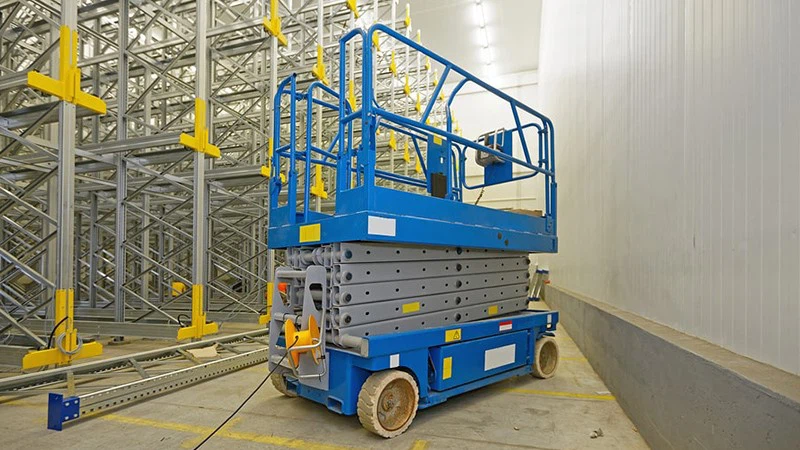
Scissor Lifts
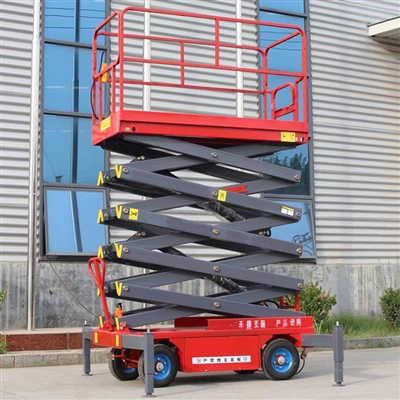
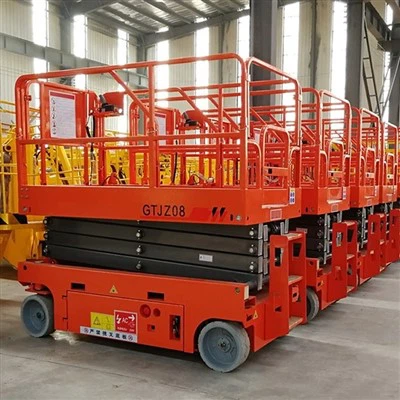
Kinocranes Scissor Lifts is electrically or diesel-powered aerial work platforms utilizing a crisscross "scissor" mechanism to provide strictly vertical lifting motion for personnel, tools, and materials. Designed primarily for stable, high-capacity operations on solid, level surfaces.
Boom Lifts - Articulating & Telescopic
Kinocranes Boom Lifts deploy articulated (knuckle) or telescopic (straight) boom structures to navigate obstacles. Articulating booms (+75°/-65° hinge motion) access confined spaces by bending around overhead barriers; telescopic booms extend horizontally (up to 37m) for clearance over walls/machinery. Both feature 360° platform rotation and 45% gradeability for complex terrain.
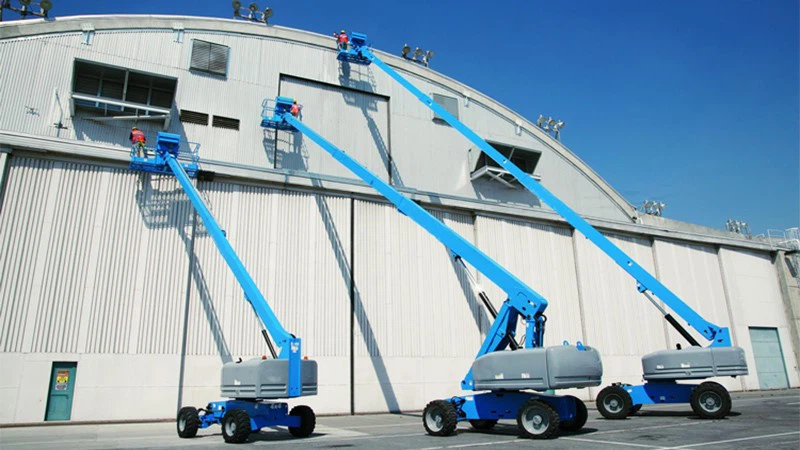
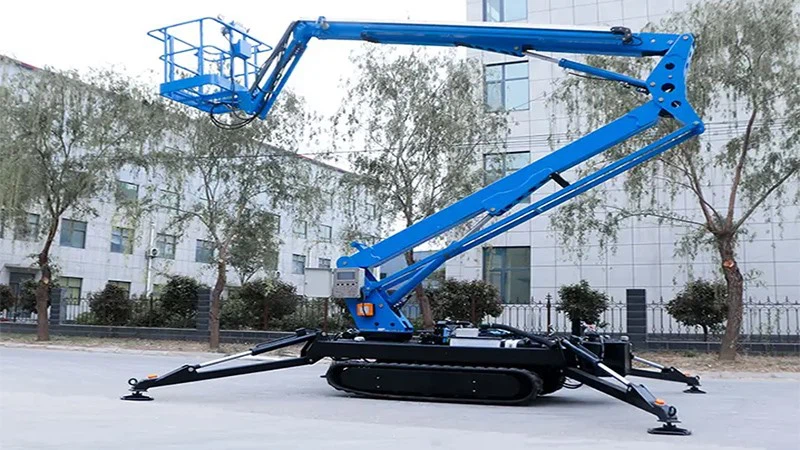
Spider Lifts
Kinocranes Spider Lifts – Compact track-driven MEWPs with auto-leveling outriggers (stabilize in 1.3m²). Achieves 52m working height at <30kPa ground pressure (lower than lawn mower), passing through 0.8m doorways. Certified for sensitive terrains (CE/ANSI, dielectric 46kV).
Mast Lifts
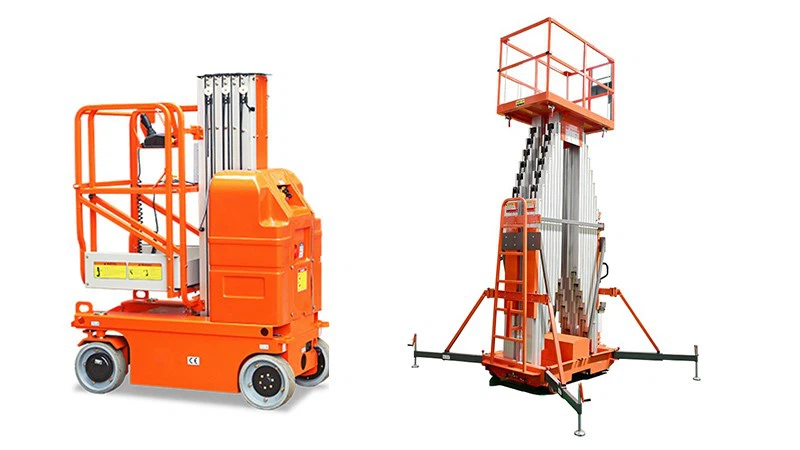
Kinocranes Mast Lifts – Dual/Triple-guide vertical MEWPs achieving 18m height in 0.8×0.9m floor footprint. Operates at ≤60dB (220V/110V) with 300kg capacity, rigid stability on 3° slopes . Passes through 0.8m doorways with mechanical/electromagnetic dual brakes.
Products


Aerial Work Platform FAQ Content
Category 1: Aerial work platform selection
Q: How do I choose the right aerial work platform for my project?
A: Short answer: Choose the platform according to the required working height, horizontal reach, rated load, ground conditions, movement method, and working environment.
Key selection points:
- Required platform height and total working height
- Load capacity, including operators, tools, and materials
- Vertical lifting or up-and-over access
- Indoor, outdoor, rough-terrain, or sensitive-ground operation
- Manual towing, self-propelled travel, crawler tracks, or vehicle mounting
- Available aisle width, doorway clearance, turning space, and storage area
- Power source, noise restrictions, and emission requirements
Scissor lifts are generally selected for stable vertical lifting on suitable surfaces. Articulating and telescopic boom lifts are considered when the work area is obstructed or when the platform must reach outward and over structures. Spider manlifts and crawler tracked scissor lifts can be considered for restricted access or more challenging ground conditions, while mast lifts and aluminum alloy lifting platforms are suited to compact indoor work. The final selection should be based on a complete site and task assessment rather than working height alone.
Q: What is the difference between an articulating boom lift and a telescopic boom lift?
A: Short answer: An articulating boom lift bends around obstacles; a telescopic boom lift provides longer, more direct outreach.
|
Comparison point |
Electric articulating boom lift |
Electric telescopic boom lift |
|
Boom movement |
Hinged sections provide up-and-over positioning |
Telescopic sections extend outward in a straighter path |
|
Main advantage |
Access around equipment, structures, and overhead obstacles |
Reach across open areas, walls, machinery, or larger clearances |
|
Typical selection focus |
Obstructed indoor or outdoor work areas |
Long horizontal reach and higher access points |
|
Site checks |
Up-and-over clearance, working radius, and turning space |
Working radius, stowed dimensions, ground conditions, and access route |
Our catalog features electric articulating boom lifts with 11.5 m to 22.5 m working heights, plus electric telescopic boom lifts covering 20.5 m to 28.8 m working heights.These size bands apply only to standard catalog models and do not fit all custom configurations.Verify working height, platform load, outreach and on-site limits before picking your boom lift unit.
Q: When should I use a towable boom lift instead of a self-propelled boom lift?
A: Short answer: Choose a towable boom lift when the machine will be transported between work locations and does not need to drive continuously around the site.
A towable boom lift may suit projects that require:
- Frequent relocation between different sites
- A compact transport and storage arrangement
- High-level maintenance, construction, or inspection work
- Automatic leveling and outrigger-supported operation
- A lower-equipment approach than a large self-propelled machine
A self-propelled electric articulating or telescopic boom lift is usually more suitable when the operator needs to reposition the machine repeatedly within the work area. Towable boom lifts get hauled by tow vehicles and set on stabilizers for operation.Our catalog carries towable boom lifts with working heights ranging 10 m to 17.85 m and rated maximum platform load of 200 kg.Verify towing matching, ground condition, outrigger coverage, working angle and regional transport regulations prior to ordering.
Q: Is a spider manlift suitable for narrow access and uneven outdoor sites?
A: Short answer: A spider manlift is suitable when the project requires a compact access footprint, flexible positioning, and stabilization through outriggers.
Check the following before ordering:
- Stowed width and height at the narrowest access point
- Doorway, gate, or passage dimensions
- Outrigger footprint and ground bearing conditions
- Working height and lateral outreach
- Slope, surface condition, and setup area
- Platform capacity and the number of occupants
- Transport route and available service access
When the low-height spider lift is retracted, its width ranges from 0.75 meters to 0.95 meters. The larger models have their own specific dimensions and weights. Each device is equipped with legs; we offer working heights ranging from 10 meters to over 50 meters. You must verify the exact dimensions of the access channels and ground load requirements based on the selected model and the on-site layout.
Q: Should I choose a self-propelled scissor lift, mobile scissor lift, or crawler tracked scissor lift?
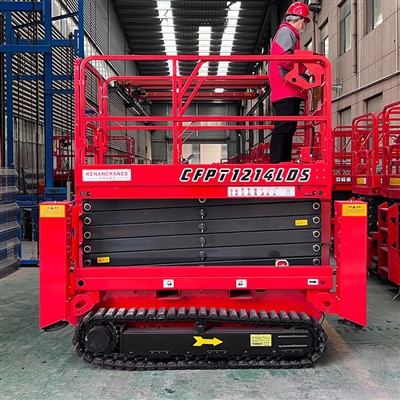
A: Short answer: Choose a self-propelled scissor lift for efficient movement on suitable surfaces, a mobile scissor lift for flexible transport and configuration options, or a crawler tracked scissor lift for rough or uneven terrain.
|
Application condition |
Recommended platform direction |
|
Indoor maintenance, installation, or warehouse work |
Electric or self-propelled scissor lift |
|
Multiple movement and power configurations are required |
Mobile scissor lift |
|
Mud, gravel, slopes, or difficult outdoor access |
Crawler tracked scissor lift |
|
Stable vertical lifting with a larger work area |
Scissor lift rather than a boom lift |
Self-propelled electric scissor lifts in the website range are battery powered, with listed load capacities of 200 kg to 550 kg and operating heights of 6 m to 14 m. The catalogue also lists mobile scissor lift configurations from 4 m to 20 m working height and 300 kg to 2,000 kg load capacity, while crawler tracked scissor lift models are listed for approximately 6 m to 15 m operation height with model-dependent capacity. These ranges are not interchangeable. Match the platform to the surface, travel requirement, load, and working height.
Category 2: Compact access and specialized platforms
Q: When is a vertical mast lift or order picker better than a boom lift?
A: Short answer: Use a vertical mast lift or order picker when the work is mainly vertical, the access aisle is restricted, and precise positioning matters more than long outreach.
These platforms are often considered for:
- Warehouses and inventory areas
- Factory maintenance and facility services
- Retail, airports, stations, and indoor public buildings
- Narrow aisles and compact working zones
- Stock picking, lighting, inspection, and installation tasks
Vertical mast lifts provide a compact footprint and direct vertical access. The catalogue describes mast lifts as lightweight machines that can pass through doors and, depending on the model, passenger elevators. Order pickers are designed for operators who need to raise themselves with goods or tools during picking and maintenance tasks. A boom lift is more suitable when the task requires horizontal outreach or access over an obstruction. Confirm aisle width, platform capacity, working height, floor condition, and whether materials will be carried with the operator.
Q: What are the advantages of an aluminum alloy lifting platform for indoor work?
A: Short answer: An aluminum alloy lifting platform is useful for lightweight, low-noise, and low-emission access work where the machine must pass through normal doors or elevators.
Important selection factors include:
- Single-, double-, triple-, four-, or six-mast configuration
- Required platform height and rated capacity
- Manual pump, external power, or battery operation
- Doorway and elevator clearance
- Floor protection and non-marking tyre requirements
- Platform size and transport method
The catalogue describes aluminum alloy lifting platforms as lightweight platforms for factories, hotels, stations, airports, theatres, exhibition halls, and similar facilities. It also identifies low noise, no pollution, elevator access, and non-marking tyres as relevant application advantages. The listed catalogue configurations range from single-mast to six-mast designs, with platform-height options extending to 24 m in the presented table. Select the mast configuration and power source according to the required height, capacity, access route, and indoor operating rules.
Q: When should I specify a vehicle mounted lifting platform?
A: Short answer: Specify a vehicle mounted lifting platform when the work is spread across roads, municipal infrastructure, lighting systems, or other locations that require rapid travel between work points.
A vehicle mounted platform is relevant when the project needs:
- Fast movement between distant work areas
- No separate external power source for lifting and lowering at the work location
- Municipal, highway, street-lighting, garden, or utility maintenance
- A customized work-table size
- A platform powered by the vehicle or an onboard battery system
The catalogue describes vehicle mounted lifting platforms as mobile equipment for municipal construction and maintenance, street lighting, highway facilities, engineering repair, and garden work. The platform size can be customized according to the project requirements. Before quotation, confirm the vehicle chassis, platform height, rated capacity, work-table dimensions, power arrangement, guardrail requirements, road regulations, and the planned setup location.
Category 3: Material handling, safety, and quotation
Q: What is the difference between a fixed scissor lift, a hydraulic dock leveler, a yard ramp, and a platform cart trolley?
A: Short answer: A fixed scissor lift raises goods between building levels, a dock leveler bridges a loading dock and truck bed, a yard ramp creates a mobile loading route, and a platform cart trolley provides short-distance lifting and movement.
|
Equipment |
Main function |
Typical decision factor |
|
Fixed scissor lift hydraulic platform |
Vertical goods lifting in production lines, warehouses, and transfer areas |
Load, lift height, pit or installation arrangement, and platform size |
|
Hydraulic dock leveler |
Bridges the height gap between dock and trailer |
Dock height, trailer movement, pit size, lip travel, and safe-stop function |
|
Yard ramp |
Provides mobile access between ground, dock, and truck bed |
Working height, ramp gradient, load rating, and available yard space |
|
Hydraulic platform cart trolley |
Manual lifting and short-distance movement of goods |
Load, lifting height, minimum height, wheel layout, and aisle space |
These products address different logistics demands and cannot be used interchangeably. Our fixed scissor platforms with customizable structures and load capacities from 0.1 ton to 100 tons, hydraulic dock levelers to connect docks and trailers, yard ramps for mobile loading access, and hydraulic platform carts rated 300 kg to 1,000 kg. Confirm material flow, loading height, load type, installation conditions and operation mode before choosing equipment.
Q: What information is needed to quote an aerial work platform or lifting platform?
A: Short answer: A reliable quotation requires the working task, height, load, movement method, site conditions, power source, and delivery or installation requirements.
Please provide:
- Product direction: boom lift, scissor lift, mast lift, spider lift, vehicle mounted platform, or material-handling platform
- Platform height, maximum working height, and horizontal reach if required
- Rated load, number of occupants, tools, and material weight
- Indoor or outdoor use and the condition of the floor or terrain
- Required movement method: towable, self-propelled, crawler tracked, vehicle mounted, manual, or fixed installation
- Doorway, aisle, road, turning-radius, storage, and transport restrictions
- Power supply, battery requirements, emissions, and noise limits
- Outrigger, stabilizer, guardrail, emergency lowering, control, or remote-control requirements
- For dock equipment: dock height, trailer height, pit dimensions, ramp gradient, and loading pattern
- Delivery destination, packaging, installation, commissioning, operator training, and after-sales requirements
For high-altitude equipment, the final configuration should be checked against the work envelope, ground or floor conditions, rated load, and applicable safety requirements. For fixed or loading equipment, the quotation must also account for the building layout, pit or dock arrangement, traffic flow, and installation interface. A layout drawing, site photograph, vehicle or dock information, and operating schedule can help the engineering team prepare a project-based quotation instead of a generic price estimate.
About Us
Kinocranes Group was founded in 2008 and Kinocranes integrate lifting equipments' research and development, manufacturing, sales, installation and service. We providing one-stop service for lifting equipments.
Professional team
We have more than 1200 employees, among which there are more than 180 engineers and technicians. The factory area is about 280 acres.
Service: 7*24h online
We have exported our cranes to more than 30 countries and regions. We have established long term cooperation relationship with each customer. We have a professional and thoughtful sales and service team, and strive to provide customers with customized products.

210Set
Production testing equipment
280
Acres of factory area
180+1200
180 engineering and technical personnel, more than 1,200 employees
108.8 million
108.8 million yuan of registered capital.
Click the button and get in touch with us immediately.
Our address
#23-03 HIGH STREET CENTRE SINGAPORE (179094)
Phone Number
+65 8376 6454
eric@kinocranes.com
