




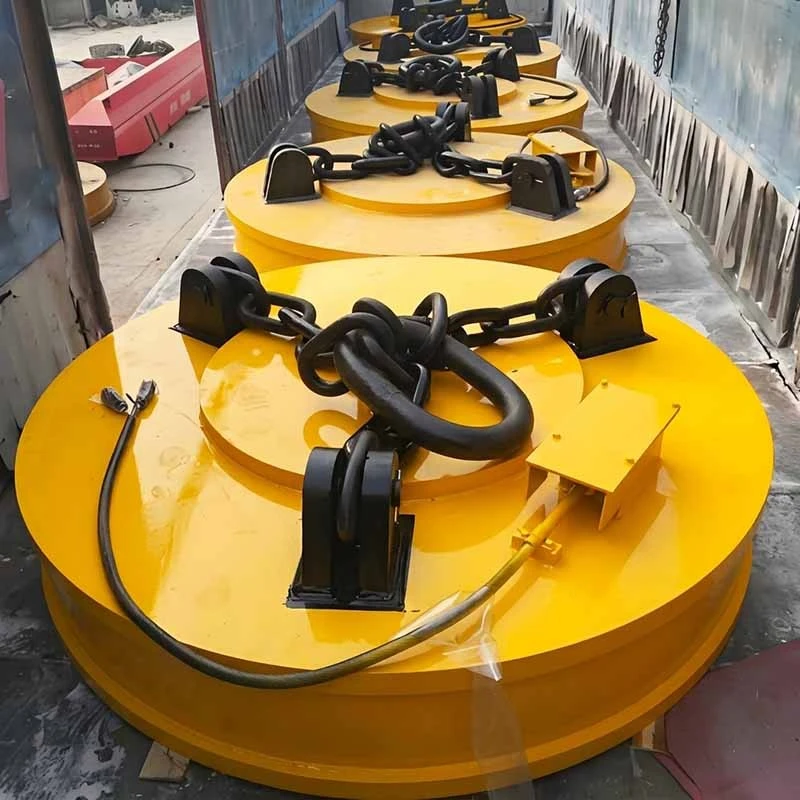
Circular Lifting Electromagnet
Rated excitation voltage:DC 220 V
Duty cycle reference:60%、75%
Cold-state power range:2.0–41.6 kW
Magnet mass:220–16,480 kg
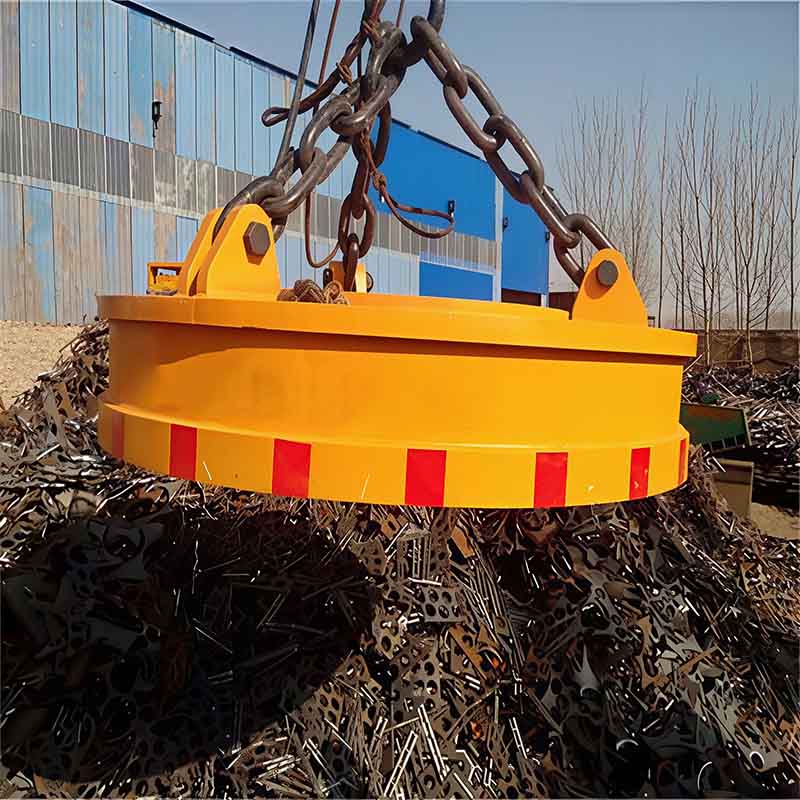
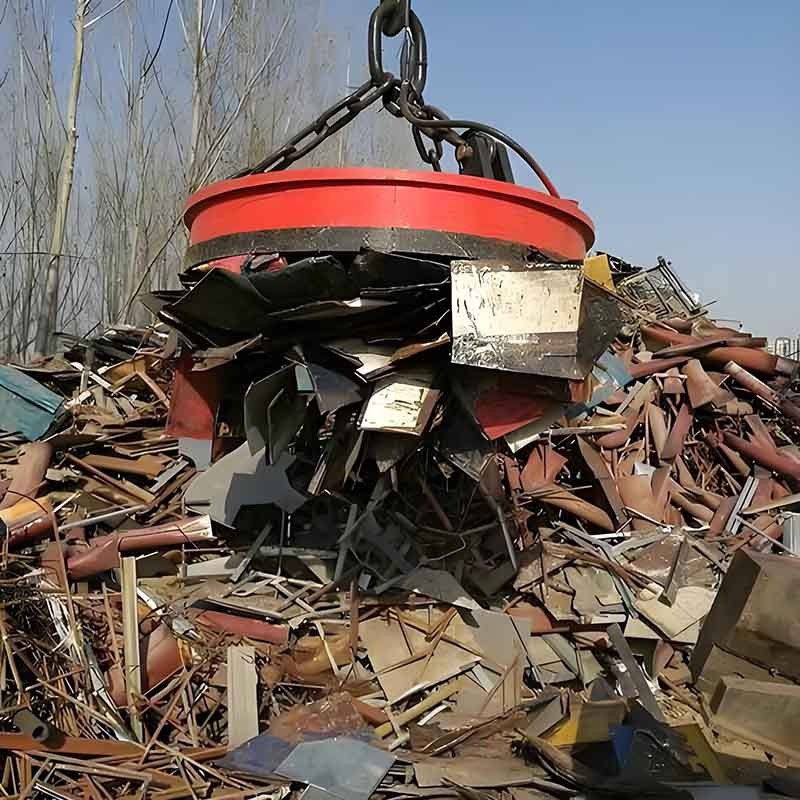
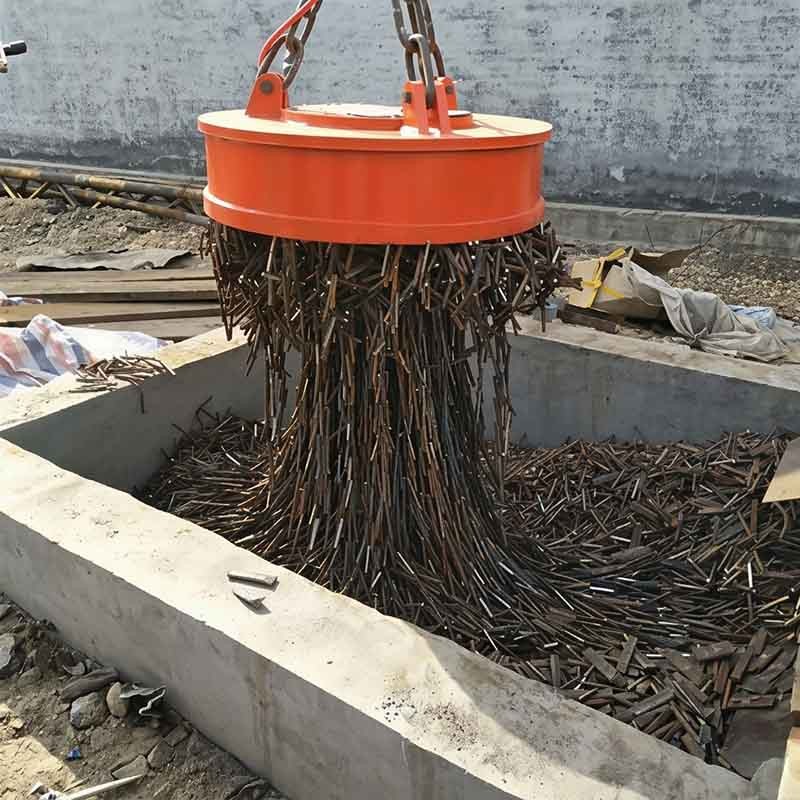
A circular lifting electromagnet provides controlled magnetic handling for ferrous charge materials where hooks, clamps or manual slinging are inefficient. The circular magnetic circuit distributes attraction across the contact face, making the unit suitable for steel balls, castings, billets, turnings, loose scrap and similar iron-bearing materials.
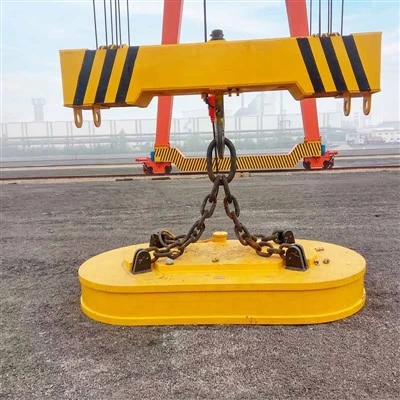
The magnet is suspended from a crane hook or lifting beam through a chain sling. A heat-resistant outlet cable connects the magnet to the DC control system. Selection must be based on the material's shape, temperature, packing condition, contact area and required duty cycle. A circular lifting magnet selected only by a nominal lifting figure can be unsuitable for the actual charge mix.
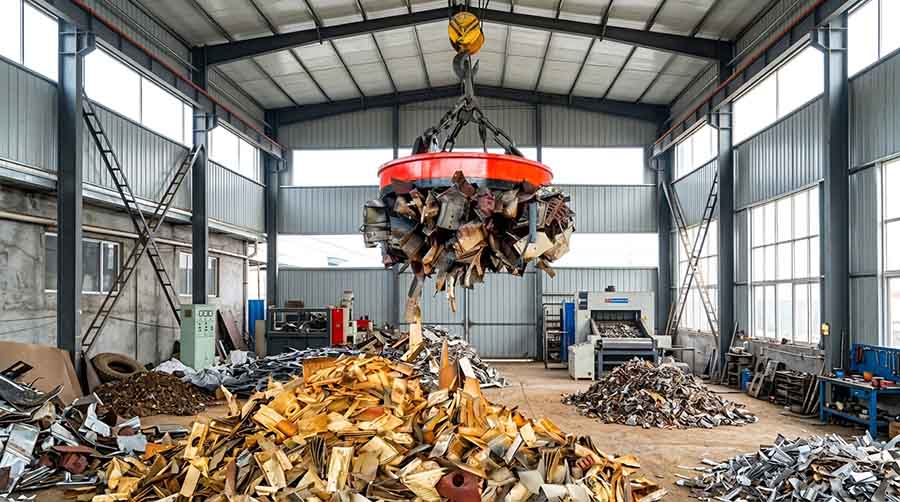
Circular Lifting Magnet Configuration
The assembly combines a steel housing, circular magnetic circuit, lifting lugs, suspension chains, coil system and protected cable outlet. The lower working face is designed for repeated contact with ferrous stock. The upper lifting arrangement transfers the load to the crane hook while maintaining stable suspension over the material.
The circular form is effective when the load does not present a long, continuous lifting surface. It is commonly specified for irregular scrap, steel turnings, steel balls, cast pieces and compact ferrous bundles. For billets or larger castings, the contact condition and magnetic path must be evaluated before final selection.
Operating Variants
- Normal-temperature configuration: for general ferrous-material handling at a 60% duty cycle.
- High-frequency configuration: for more frequent energizing cycles, with a 75% duty cycle reference.
- High-temperature configuration: for hot-material handling where temperature resistance is required; duty cycle reference is 60%.
The operating variant must match the handling cycle and material temperature. Frequent switching increases thermal load on the coil system. Hot material can reduce magnetic attraction and requires separate confirmation of the allowable working condition.
Technical Parameters
The parameter ranges below define the available configuration envelope. They are selection references, not a universal lifting commitment. Lifting results change with material composition, size distribution, temperature, air gap, surface condition, load geometry and the controller/cable configuration.
|
Parameter |
Normal Temperature |
High Frequency |
High Temperature |
|
Rated excitation voltage |
DC 220 V |
DC 220 V |
DC 220 V |
|
Duty cycle reference |
60% |
75% |
60% |
|
Cold-state power range |
2.6–41.6 kW |
2.0–32.5 kW |
2.0–32.0 kW |
|
Overall diameter A |
500–3,000 mm |
500–3,000 mm |
500–3,000 mm |
|
Overall height C |
700–2,300 mm |
700–2,250 mm |
700–2,350 mm |
|
Magnet mass |
220–15,500 kg |
253–13,600 kg |
220–16,480 kg |
|
Steel-ball lifting reference |
1,400–45,500 kg |
1,200–30,000 kg |
1,200–34,000 kg |
|
Casting-ingot reference, cold/hot |
220/130–8,350/6,700 kg |
220/130–7,100/5,700 kg |
220/130–8,350/6,700 kg |
|
Turnings reference, cold/hot |
80/65–5,250/4,100 kg |
80/65–4,450/3,400 kg |
80/65–5,250/4,100 kg |
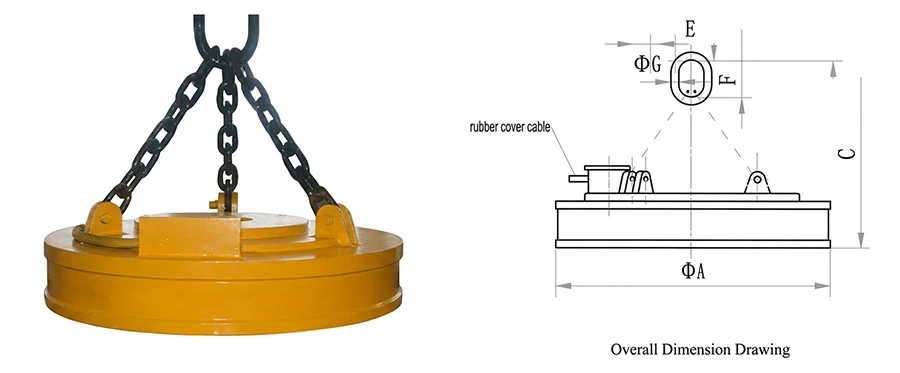
Dimensional reference: Across the configuration range, F is 160–500 mm, E is 90–300 mm and G is 25–100 mm. Confirm hook clearance, sling geometry, cable routing and available headroom with the crane arrangement before manufacture.
Material-Specific Lifting Performance
A circular lifting electromagnet does not produce one fixed lifting capacity for every material. Steel balls, castings and turnings establish different magnetic contact paths. Dense, clean material with broad contact area generally produces a more stable magnetic connection than thin, loose or contaminated scrap.
Temperature is equally important. Cold- and hot-state lifting references are specified separately for cast ingots and turnings. These values serve only as an initial selection basis. Final lifting performance must be verified against the actual material temperature, single-piece or bulk handling method, material density and required safety margin.
Selection Requirements for a Circular Lifting Electromagnet
- Material type and size range - steel balls, castings, turnings, bundled scrap or other ferrous charge.
- Material temperature - ambient, warm or hot condition at the point of lifting.
- Required handling cycle - lifts per hour, magnet-on time and expected duty cycle.
- Target load condition - single piece, compact bundle, loose bulk material or layered pile.
- Crane interface - available hook height, lifting beam arrangement, supply voltage, controller location and cable travel.
This information determines the magnetic circuit, coil thermal class, duty cycle, suspension arrangement and practical lifting reference for the project.
Typical Applications
- Scrap yards handling loose ferrous scrap and turnings
- Foundries charging cast iron and steel materials
- Steel plants moving steel balls, billets, ingots and process scrap
- Reclamation and sorting lines handling iron-bearing material
- Yard cranes and overhead cranes fitted with DC magnet controls
Installation and Operating Considerations
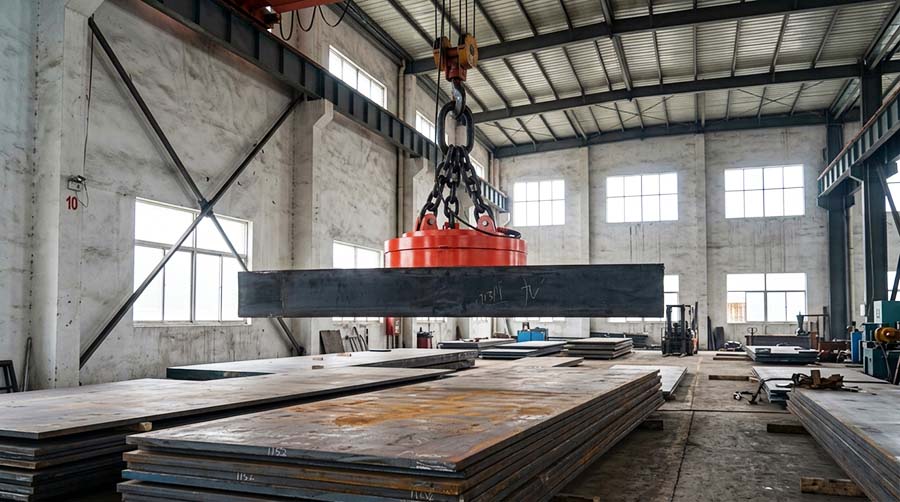
The crane structure, hook block and sling arrangement must be sized for the combined mass of the magnet and its maximum verified load. The cable requires protection from abrasion, crushing and radiant heat. The controller should provide reliable energizing and de-energizing control suited to the operating cycle.
Before routine production use, conduct a site acceptance test with representative material. Confirm the actual pickup condition, retention during travel, discharge behavior, cable movement and thermal performance. Do not use the reference capacities as a substitute for an application-specific lifting assessment.
FAQ
What materials can a circular lifting electromagnet handle?
It is intended for ferrous materials such as steel balls, castings, billets, turnings and iron-bearing scrap. Suitability depends on the material's magnetic properties, shape, contact area and temperature.
Is the lifting capacity the same for every material?
No. Magnetic lifting performance differs significantly between dense steel balls, cast ingots, turnings and loose scrap. The reference table separates material categories because the magnetic contact condition is different.
Why are cold and hot lifting references listed separately?
Elevated material temperature can reduce magnetic attraction and increases thermal demand on the magnet. Hot-material handling requires a configuration selected for the actual temperature and cycle.
When should a high-frequency configuration be selected?
Use a high-frequency configuration when the operation requires repeated energizing cycles and a higher duty-cycle reference. The expected lift frequency and magnet-on time should be defined during selection.
What power supply does the circular lifting magnet require?
The circular lifting electromagnet uses DC 220 V rated excitation within this configuration range. The control system, cable length and crane electrical arrangement must be confirmed for the project.
Can the magnet be selected from the maximum lifting reference alone?
No. The material condition, temperature, air gap, packing density, required duty cycle and crane interface must all be reviewed. A site-specific lifting assessment is required before confirming the working load.
Hot Tags: circular lifting electromagnet, China circular lifting electromagnet manufacturers, suppliers, factory, Circular Lifting Magnets, Excavator Electromagnet, Excavator Grab Bucket, Excavator Lifting Magnet, Magnet By Types, Round Lifting Electromagnet
Previous
No InformationYou Might Also Like


Send Inquiry