


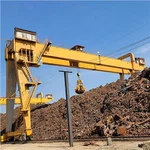

Gantry Crane
Gantry Crane
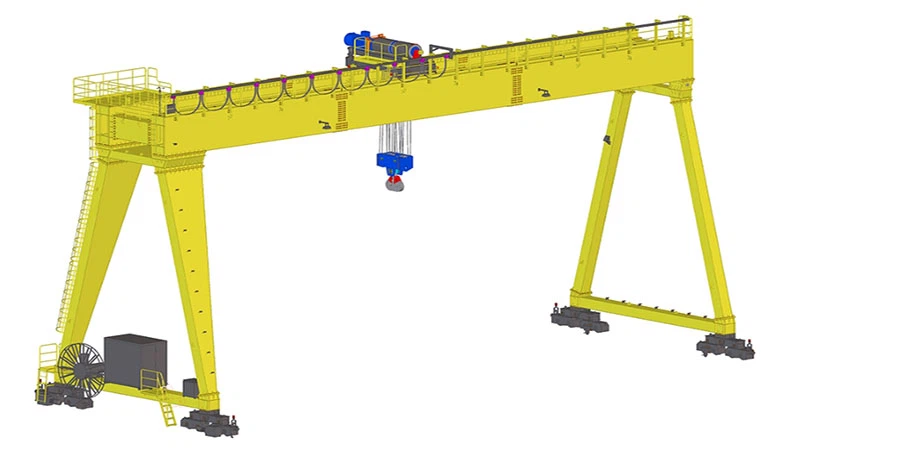
Gantry Crane
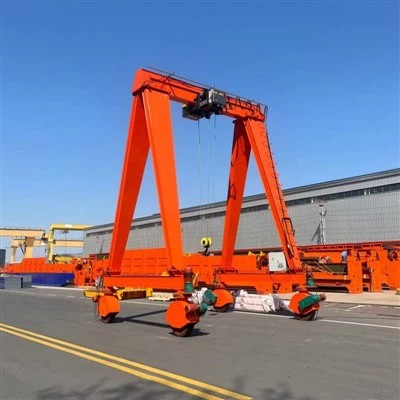
The structure of a gantry crane is a portal structure consisting of a crossbeam supported by two legs. This type of crane operates on ground tracks and is mainly used for handling and installation operations in open-air storage yards, shipyards, power stations, ports, and railway freight stations.As a leading manufacturer and supplier, Kinocranes Cranes & Components offers fully customizable pre-engineered gantry cranes to meet your specific application needs. Our gantry cranes and portal cranes are designed for simplicity, usability, and maximum productivity while ensuring safety.
Independent Support Structure
The rigid support legs are directly fixed to the ground track and can be designed as L-shaped, C-shaped, or U-shaped.
High Load-bearing Capacity
The lifting capacity can reach up to 500 tons, supporting large-span operations.
Tolerance To Extreme Conditions
Can withstand high humidity, high salt spray, low temperature environment, heavy rain, and strong wind weather.
Gantry Cranes Control Mode
Wireless remote control and cabin control,remote control with effective observation distance of 50-100 m.
Kinocranes Gantry Crane
Kinocranes gantry cranes are used for transporting steel structures in various indoor and outdoor buildings and work areas. Its design optimizes the utilization of workspace, providing a wide working area around the crane compared to overhead cranes, and is suitable for heavy-duty movements, especially in outdoor environments.Kinocranes is a professional factory that manufactures gantry cranes. Our various types of cranes are designed to meet different requirements. Welcome to consult with us, we will provide more detailed parameters and design solutions.
Gantry Crane Types
The different types of gantry cranes directly affect multiple dimensions such as structural performance, operational efficiency, safety, and economic cost.
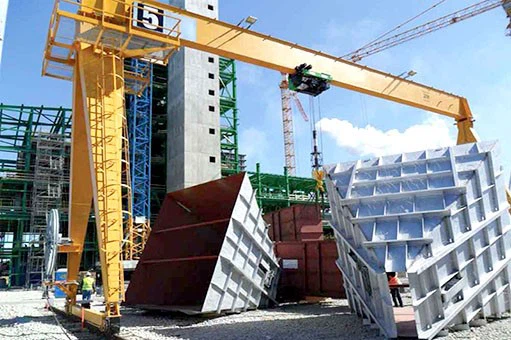
Single Girder Gantry Crane
Single beam lightweight, flexible loading and unloading, suitable for material handling in factory warehouses and docks.
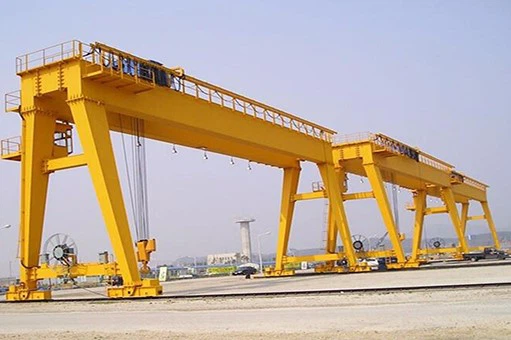
Double Girder Gantry Crane
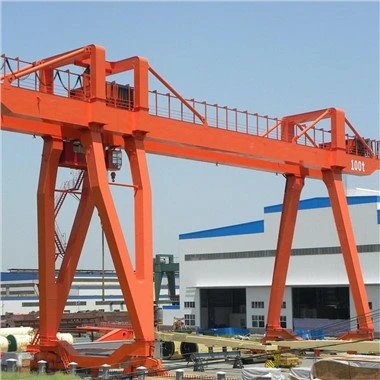
Double beam heavy-duty stable operation, strong wind resistance, large span, suitable for port shipyard heavy industry.
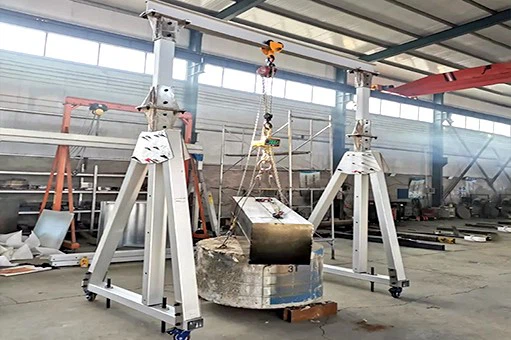
Portable Gantry Crane
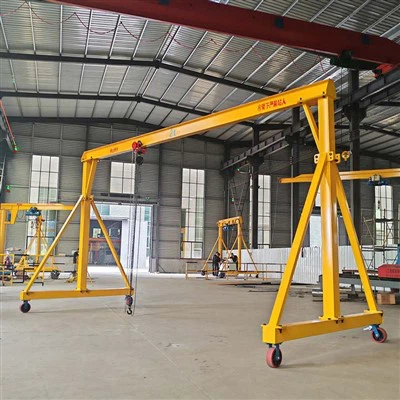
Flexible movement and disassembly, lightweight lifting for factory warehouses and construction sites, efficient and labor-saving.
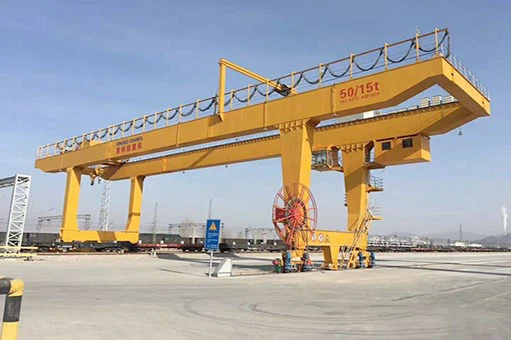
Container Gantry Crane
Container specific, large-span elevated, efficient stacking and loading/unloading in the yard.
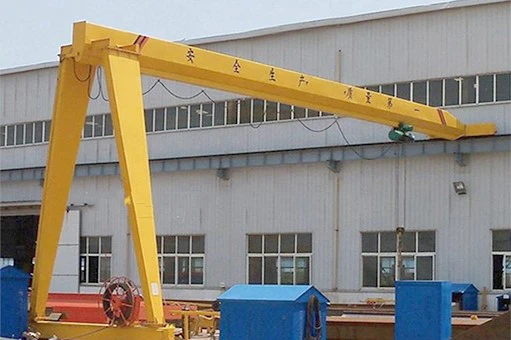
Semi Gantry Crane
Single leg support, factory track support, efficient loading and unloading of factory warehouses, and bridge door integration.
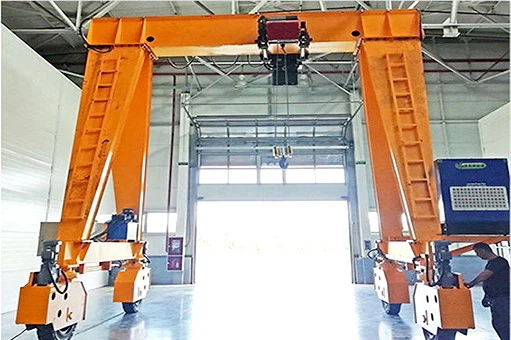
RTG Rubber Tyre Gantry Crane
The chassis of the tires can smoothly transfer positions, with hydraulic telescopic arms and mobile lifting equipment for construction sites and ports.
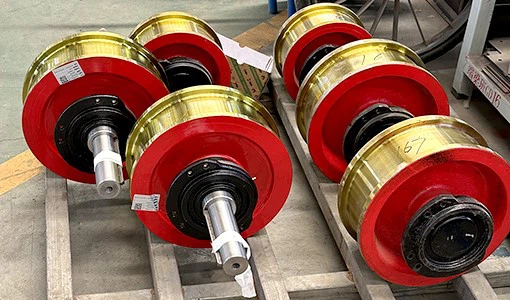
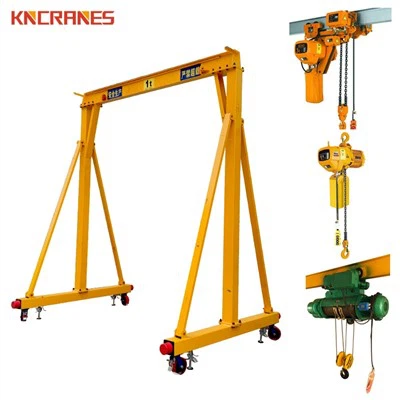
Related accessories of the Gantry crane
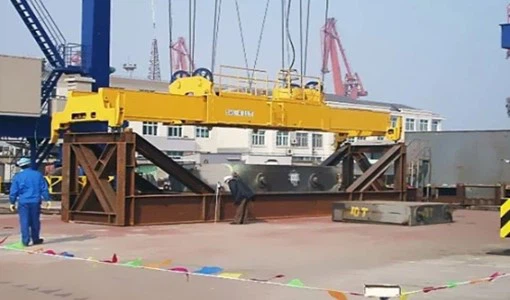
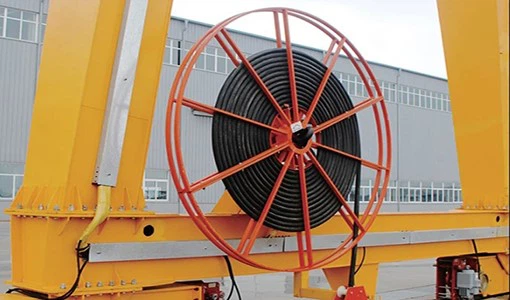
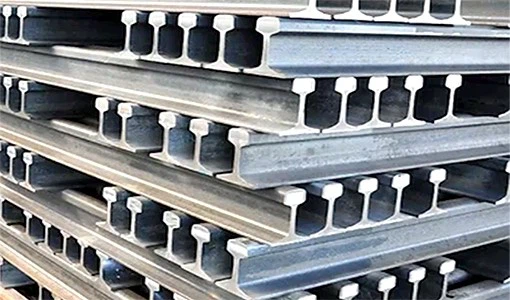
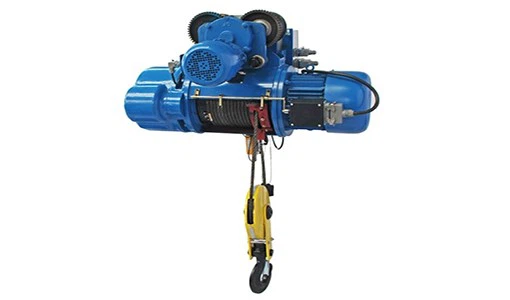

Products




Gantry Crane FAQ Content
CATEGORY 1: Basics & Understanding
Q: What is a gantry crane and what is it used for?
A: The gantry crane is a self-standing high-altitude lifting equipment. The entire machine is supported and loaded by at least two sets of legs. It can move within the site by relying on ground rail or rubber wheel sets. Compared with overhead crane, the gantry crane does not need to set up the main beam of the rail on the building wall. It can operate stably by relying solely on its own frame structure. Common use cases we see across our customer base:
- Outdoor material storage — steel yards, precast concrete plants, lumber yards
- Container terminals — RMG and RTG gantry cranes handle the bulk of global container stacking operations
- Workshops and warehouses where the building structure cannot support bridge crane loads
- Shipbuilding, power plant construction, and heavy assembly applications
At Kinocranes, we manufacture gantry cranes from 1 ton portable units up to 500+ ton shipyard installations. They're the go-to choice for outdoor lifting or any situation where modifying the building isn't an option.
Q: How does a gantry crane work?
A: Three independent motion axes provide full load positioning capability:
- Lifting (vertical): Heavy loads are lifted using wire rope hoists or chain hoists. Industrial gantry cranes are generally equipped with electric lifting devices, while lightweight mobile models often use manual chain hoists.
- Trolley travel (Span Crossing): The lifting trolley travels back and forth along the main beam, covering the entire span.
- Gantry travel (along runway): The entire machine moves using ground rails or rubber tires. Stacking cranes are flexible and do not require a fixed rail for movement.
Control options include pendant stations, radio remote controls, or full operator cabins on large port cranes. Our standard units use ABB or Siemens electrical components with SEW or Dongyue gearboxes. Power is supplied through cable reels, festoon conductor systems, or diesel generators on mobile configurations.
Q: What is the difference between a gantry crane and an overhead crane?
A: The core difference between the two lies in the different forms of overall support and operation setup.
The bridge crane is suspended entirely and its rail are fixed to the factory columns and roof steel beams. The equipment body never touches the ground throughout its operation. When the factory building is initially designed according to the lifting load standard, choosing this model can maximize the utilization of the internal space.
The gantry crane is supported by its own legs and can be placed on the ground for movement. It can also be equipped with rubber wheels for flexible movement. Installation does not require any changes to the building structure. It is suitable for outdoor sites, rental factory areas, and operation scenarios where the roof has no load-bearing design.
We frequently supply both types to the same customer — bridge cranes inside the workshop, gantry cranes in the yard for outdoor storage, truck loading, and material transfer between buildings.
CATEGORY 2: Selection & Buying
Q: How much does a gantry crane cost?
A: Price is driven by capacity, span, lift height, and duty class. Below are typical FOB ranges from our Henan manufacturing facility:
- 1–5 ton portable/A-frame gantry: 3,000–12,000
- 5–20 ton single girder gantry: 10,000–45,000
- 20–50 ton double girder gantry: 35,000–120,000
- 50–200+ ton port/shipyard gantry: 80,000–500,000+
Cost factors:Key elements that affect pricing include single or double girder design, span size, special working conditions, control mode and delivery distance. We will send you full formal quotation within two days once we get your detailed requirements.
Q: What is an A-frame gantry crane?
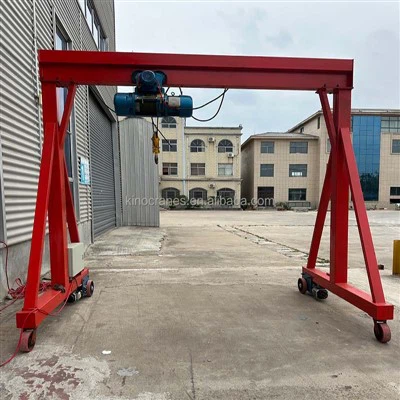
A: An A-frame gantry crane has two triangulated leg assemblies supporting a horizontal beam. The triangular geometry provides lateral stability without diagonal bracing — this keeps the frame light and allows knockdown or foldable designs.
Advantages of A-frame gantry cranes:
- Easy to move using fixed casters, no foundation required.
- Most models are height adjustable to meet various lifting needs.
- Available in carbon steel portable gantry crane and aluminum alloy mini gantry crane; the aluminum alloy version is 40% lighter, ideal for frequent relocation.
- Standard load capacities range from 1 to 20 tons, with a maximum span of 6 meters.
Custom stainless steel versions are also available, ideal for food, pharmaceutical, and cleanroom environments requiring corrosion-resistant and pollution-free operating conditions.
Q: Should I build a gantry crane myself or buy from a manufacturer?
A: In private settings, such as home use, for light-duty operations under 1ton, a welded frame with compliant lifting equipment is sufficient for basic needs. However, the risks differ significantly between commercial and industrial applications.
- Structural certification: Original manufacturer equipment undergoes finite element analysis and 1.25 times rated load compressive strength testing. Welding processes, connector construction, and repeated load fatigue strength are all professionally verified to mitigate structural hazards under heavy loads.
- Regulatory requirements: Regarding industry compliance, regulations mandate that lifting equipment must obtain third-party certifications such as CE, CMAA, and ISO. Self-assembled equipment cannot obtain compliant certifications.
- Insurance:Commercial insurance also requires certified models; equipment that does not meet compliance standards will directly affect insurance coverage.
Considering the costs of steel, processing time, compliant winches, brakes, and electrical control components, the cost of self-made equipment is comparable to that of a pre-built crane, but it lacks formal engineering documentation, warranty service, and after-sales support.
CATEGORY 3: Technical & Project Delivery
Q: How to design a gantry crane? What size beam do I need?
A: Beam section selection depends on three parameters: rated capacity, span, and duty classification. None can be determined in isolation.
As a working reference — a 5-ton gantry at 10m span under ISO A4 / FEM 1Am duty typically requires an I-beam in the 300–400mm range or equivalent box girder. At 15m span, this shifts to 450mm+ or a double girder arrangement to keep deflection within limits.
Design sequence our engineering team follows:
- Establish SWL and apply the safety coefficient per governing standard (FEM: 1.25× base factor, plus dynamic load factors)
- Calculate bending moment and shear from span + payload + structure self-weight
- Check deflection: span/800 for standard duty, span/1000 for precision or high-cycle applications
- Outdoor units: add wind loading per ISO 4302 — this frequently governs the leg and wheel assembly design
We provide full structural calculations and FEA reports for every crane we manufacture. If you're in the planning phase, send us your load and span data and our engineers will return a validated beam recommendation within 2–3 working days.
Q: How is a gantry crane installed and commissioned?
A: A gantry crane installation typically proceeds through four phases:
- Foundation and rails: For rail-mounted cranes, we supply foundation load distribution drawings and rail alignment specifications. The customer's civil contractor handles concrete work and rail grouting. RTG/mobile units only need a compacted, level surface with adequate bearing capacity.
- Delivery and assembly: Cranes ship knocked-down — girders, legs, end trucks, hoist, and electrical panels as separate assemblies. A mobile crane is used to stand the legs and set the bridge beam. Structural connections are high-strength bolted or site-welded per our assembly drawings.
- Mechanical and electrical completion: Hoist and trolley mounted, wire rope reeved, hook block installed. Electrical panel wired, limit switches calibrated, control station commissioned.
- Load test and handover: Proof load test to 110–125% of rated capacity, full functional verification of all safety devices, followed by operator and maintenance training.
Kinocranes provides on-site installation supervision worldwide. For 5–50 ton units, our crew typically needs 5–15 working days. We also supply installation manuals and video guidance for customers handling smaller units independently, with our engineer available for the final commissioning and load test.
Q: What is a rail mounted gantry crane (RMG) vs. rubber tyred gantry crane (RTG)?
A: Both types of equipment can handle container and oversized cargo loading and unloading operations, but their walking structures and site requirements differ fundamentally.
RMG (Rail-Mounted Gantry Crane) operates by traveling on pre-embedded tracks. Standard models can cover six to eight container stacking areas while reserving passageways for vehicles, with a rated lifting capacity range of 40 to 65 tons. This model offers high operating speed, high positioning accuracy, and lower maintenance costs per container. Initial investment in track infrastructure is required, making it suitable for container yards with high cargo volume and stable operating conditions.
RTG (Rubber-Tyred Gantry Crane) uses rubber tires and is equipped with a hydraulic steering mechanism, eliminating the need for fixed tracks. The mainstream power source is diesel/electric drive; however, due to port environmental regulations, the use of electric motor models is continuously increasing. Its biggest advantage lies in its flexible site adaptability, allowing for adjustments to the driving route and cargo stacking arrangement based on operational scheduling.
Kinocranes provides complete series container gantry cranes. Our equipment covers lifting capacity from 10 tons to more than 100 tons.RMG cranes fit ports featuring fixed operation routes and large cargo handling volume. RTG cranes are ideal options for yards requiring flexible layout adjustment and phased port construction.
Q: What specifications do I need to provide for a gantry crane quotation?
A: Three parameters are enough for a budgetary estimate:
- Rated capacity — maximum load including any attachments (grab, spreader, magnet)
- Span — center-to-center distance between the leg travel rails
- Lifting height — hook travel from ground to highest position
For an accurate formal quote, please provide the following parameters:
- Power supply: State your onsite voltage, frequency and phase. We tailor electrical systems to match local grid requirements.
- Installation site: Confirm indoor or outdoor use. Note harsh conditions like flammable atmosphere, corrosion or extreme temperatures. Our cranes run steadily from -30℃ to 50℃.
- Working routine: Tell us hourly lifting cycles and daily service hours. These data decide equipment class and guide motor, gearbox and electric part selection.
- Runway travel length
- Control preference: pendant, radio remote, operator cabin, or combination
If you're still finalizing some parameters, that's fine. Our application engineers work with customers to determine specifications based on operational requirements and site conditions. We typically provide a budgetary quote within 48 hours of receiving your inquiry.
About Us
Kinocranes Group was founded in 2008 and Kinocranes integrate lifting equipments' research and development, manufacturing, sales, installation and service. We providing one-stop service for lifting equipments.
Professional team
We have more than 1200 employees, among which there are more than 180 engineers and technicians. The factory area is about 280 acres.
Service: 7*24honline
We have exported our cranes to more than 30 countries and regions. We have established long term cooperation relationship with each customer. We have a professional and thoughtful sales and service team, and strive to provide customers with customized products.

210Set
Production testing equipment
280
Acres of factory area
180+1200
180 engineering and technical personnel, more than 1,200 employees
108.8 million
108.8 million yuan of registered capital.
Click the button and get in touch with us immediately.
Our address
#23-03 HIGH STREET CENTRE SINGAPORE (179094)
Phone Number
+65 8376 6454
sale@kinocranes.com
