




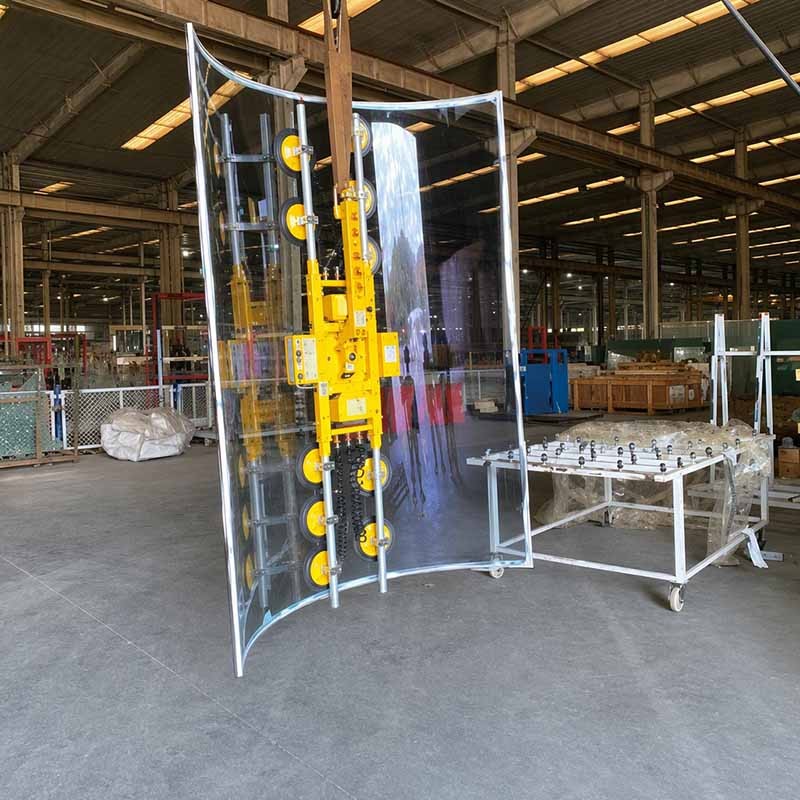
Glass Vacuum Lifter (Industrial)
Supply:DC 12 V / DC 48 V / DC 24 V;0.6-0.8 MPa
Capacity:200kg-10 Ton
Function:0-90° tilt + 0-360° rotation
Product Description
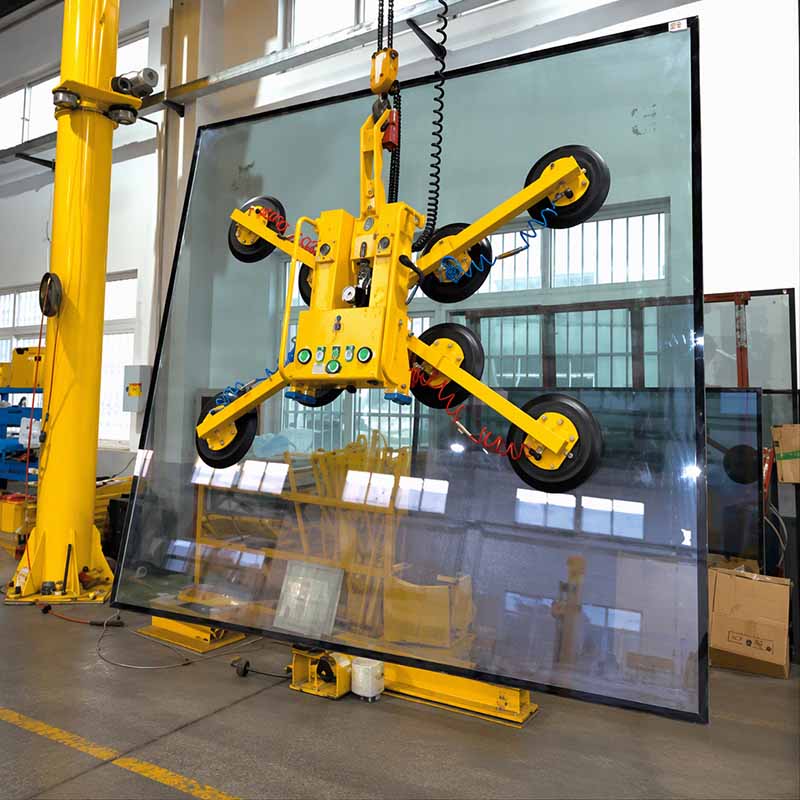
The Glass Vacuum Lifter is a suspended lifting device that can be used for transporting flat glass, insulating glass, curtain wall glass and arc-shaped glass. The principle of lifting the glass is different from that of a hook. It uses vacuum suction cups to attach to the glass and achieve the lifting effect. It supports lifting, lowering and rotating the glass, and does not require touching the periphery of the glass, thus not affecting the installation of the glass.
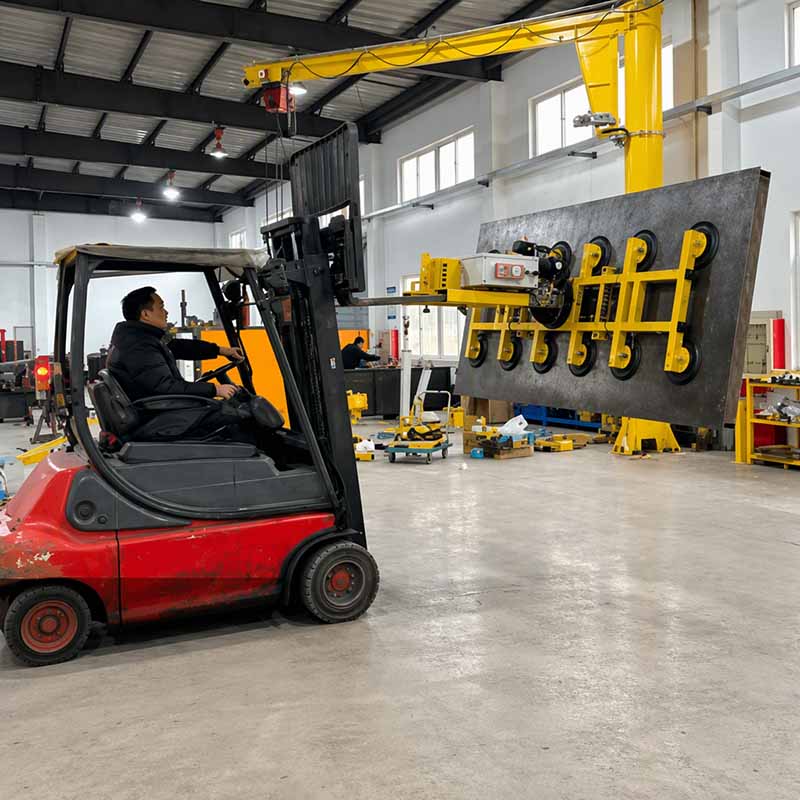
This glass lifting equipment can be used in combination with bridge cranes, forklifts, truck cranes or KBK cranes, and has manual, electric, hydraulic and pneumatic versions, suitable for different sizes of glass, working frequencies and rotation requirements.
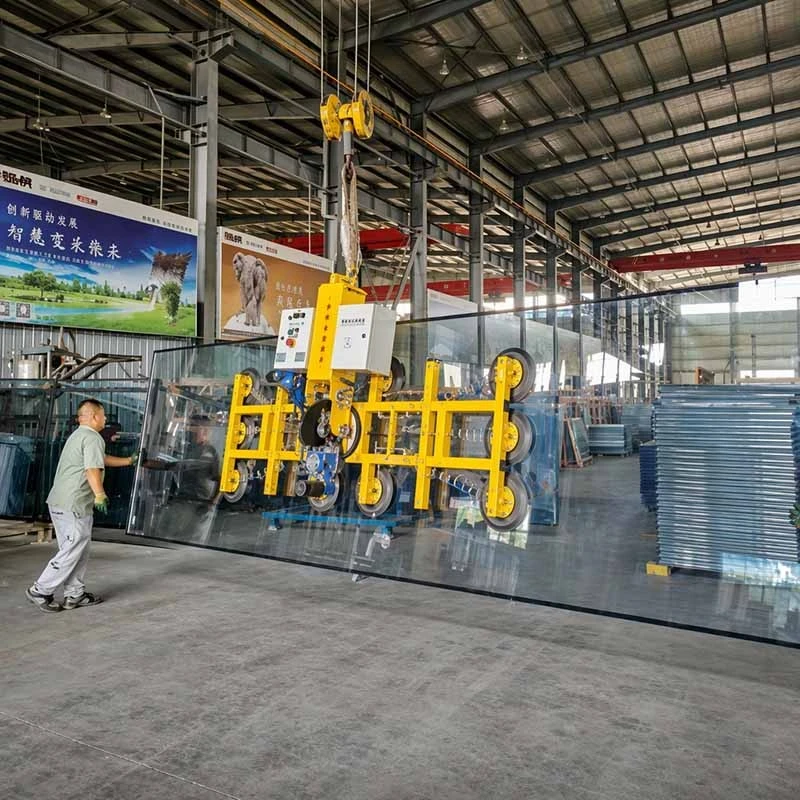
A properly selected glass lifter does more than lift a panel vertically. It keeps the panel controlled while moving from a horizontal rack to a vertical installation position, rotating beside an opening, or transferring between process stations. The suction pattern, frame length and turning mechanism must be selected for the glass in use.
Product Features
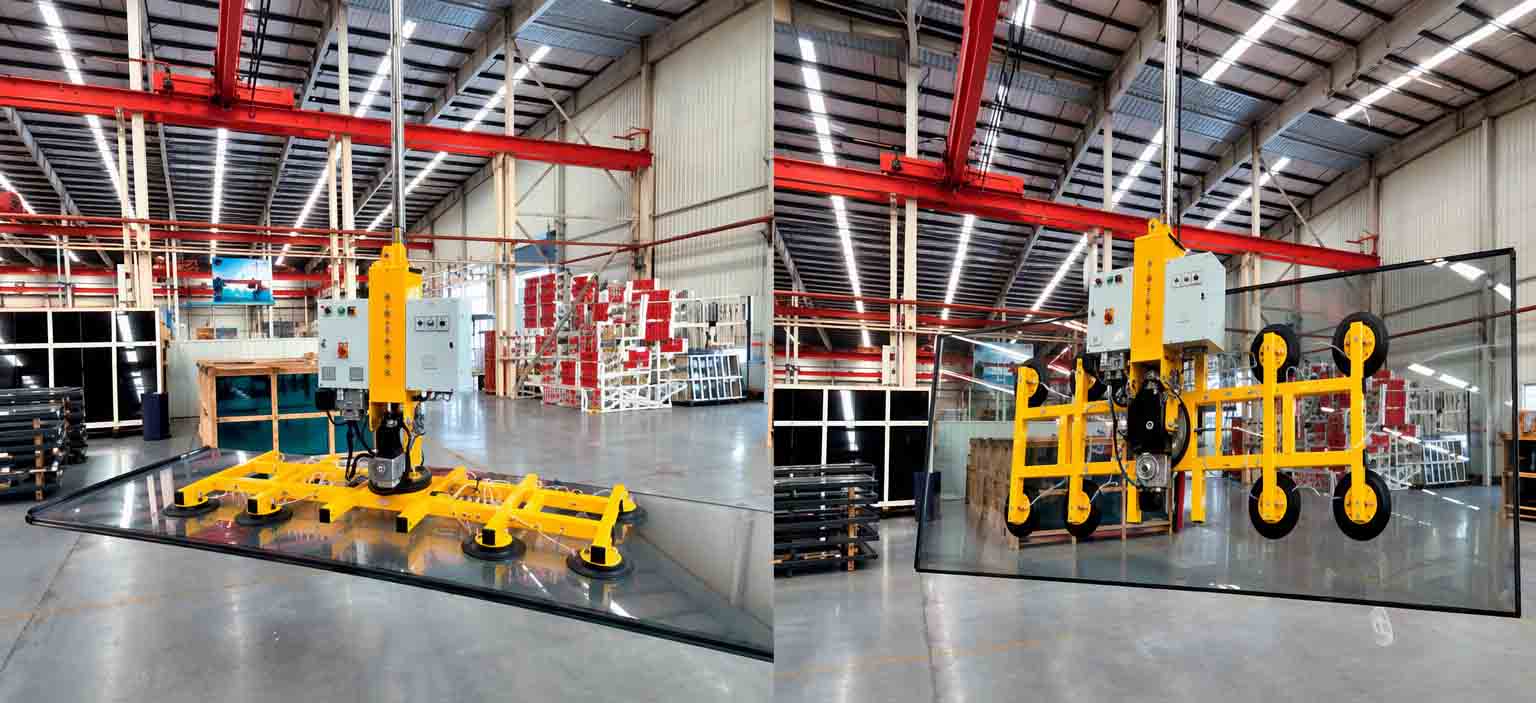
Adjustable Vacuum Cup Layout
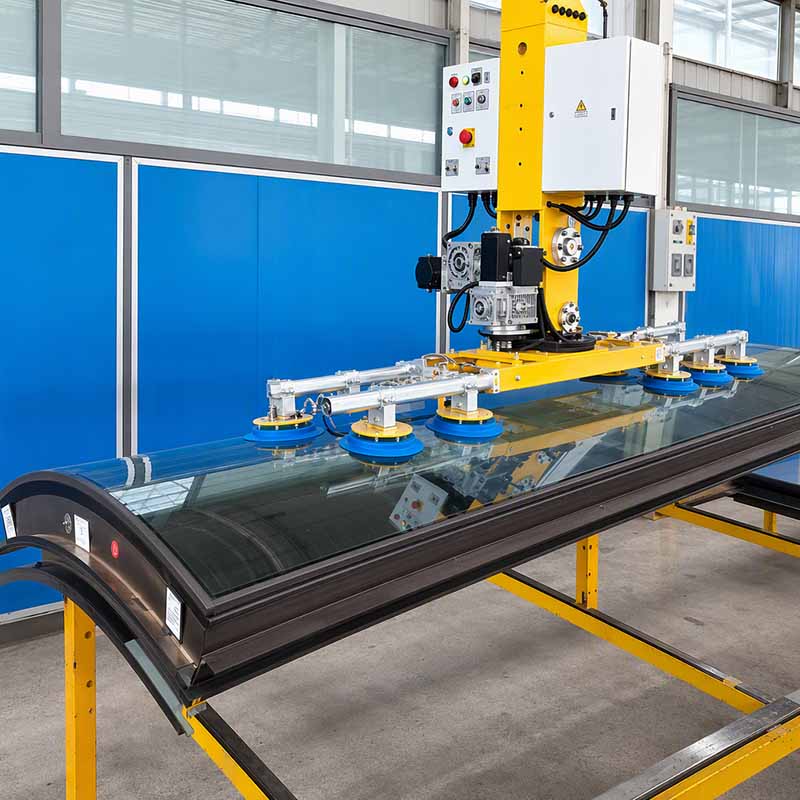
Glass lifting suction cups can be easily removed and repositioned according to the working conditions. For flat glass, circular suction cups can be used; for curved glass, adjustable cup arms can be employed to match the required radius.
Manual, Electric, Hydraulic and Pneumatic Control
The manual series has a tilting angle range of 0-90° and a rotating angle range of 0-360°. The electric tilting and rotating, hydraulic tilting and rotating, as well as pneumatic handling can all be adjusted freely. The version can be selected based on parameters such as the weight of the glass plate, the size of the frame, and the height of the hook.
Configurations for Flat and Curved Glass
Flat-glass units are available from compact single-interface models to multi-cup frames. Curved-glass glass vacuum lifters can be configured for inside or outside radii. The cup angles, arm positions and turning axis are set from the actual curved-glass drawing.
Multi-Cup Vacuum Arrangement
The multi-cup configuration involves distributing suction cups on the glass surface to create multiple fixed points, and it can also have a vacuum circuit set up. This way, local sealing failure can be avoided. Before determining the layout of the suction cups, the glass needs to be inspecte.
Controlled Turning for Installation and Processing
The glass lifting device can achieve horizontal movement, vertical movement and controlled rotation of the glass. It is applicable to various scenarios such as glass installation, glass transportation, glass cutting, glass edge processing and glass cleaning.

Product Parameters
Product Range
|
Series |
Drive / Supply |
Reference capacity range |
Function |
Typical application |
|
HP-SFX manual series |
DC 12 V |
200-1,500 kg |
Manual 0-90° tilt + 0-360° rotation |
Flat-glass transfer and site installation |
|
HP-DFX electric series |
DC 48 V |
600-1,000 kg |
Electric 0-90° tilt + 0-360° rotation |
Repetitive factory handling |
|
HP-YFX hydraulic series |
DC 24 V |
1,500 kg-10 t |
Hydraulic 0-90° tilt + 0-360° rotation |
Large façade glass and heavy panels |
|
HP-SFXA / DFXA / YFXA curved-glass series |
DC 12 V / DC 48 V / DC 24 V |
200 kg-10 t |
Manual, electric or hydraulic tilt and rotation |
Curved glass and non-flat glazing |
|
HP-QF pneumatic series |
Compressed air, 0.6-0.8 MPa |
150-500 kg |
Pneumatic turning or rotation by configuration |
Fixed glass-processing stations |
Representative Flat-Glass Models
|
Model |
Reference capacity |
Overall dimensions (mm) |
Suction cup / interface |
Cup quantity |
Supply |
Control and movement |
|
HP-SFXi500-1S |
500 kg |
800 x 400 x 240 |
800 x 400 mm rectangular interface |
1 |
DC 12 V |
Manual 0-90° tilt + 0-360° rotation |
|
HP-SFXi750-1S |
750 kg |
1,000 x 500 x 240 |
1,000 x 500 mm rectangular interface |
1 |
DC 12 V |
Manual 0-90° tilt + 0-360° rotation |
|
HP-SFX400-4S |
400 kg |
900 x 730 x 240 |
Dia. 300 mm |
4 |
DC 12 V |
Manual 0-90° tilt + 0-360° rotation |
|
HP-SFX600-6S |
600 kg |
1,800 x 1,190 x 240 |
Dia. 300 mm |
6 |
DC 12 V |
Manual 0-90° tilt + 0-360° rotation |
|
HP-SFX800-8S |
800 kg |
1,800 x 1,190 x 240 |
Dia. 300 mm |
8 |
DC 12 V |
Manual 0-90° tilt + 0-360° rotation |
|
HP-SFXH1000-10S |
1,000 kg |
(625 + 1,400 + 625) x 1,000 x 240 |
Dia. 300 mm |
10 |
DC 12 V |
Manual 0-90° tilt + 0-360° rotation |
|
HP-DFX600-6S |
600 kg |
(625 + 1,400 + 625) x 1,000 x 480 |
Dia. 300 mm |
6 |
DC 48 V |
Electric 0-90° tilt + 0-360° rotation |
|
HP-DFX800-8S |
800 kg |
(625 + 1,400 + 625) x 1,000 x 480 |
Dia. 300 mm |
8 |
DC 48 V |
Electric 0-90° tilt + 0-360° rotation |
|
HP-DFX1000-12S |
1,000 kg |
(625 + 1,400 + 625) x 1,000 x 480 |
Dia. 300 mm |
12 |
DC 48 V |
Electric 0-90° tilt + 0-360° rotation |
|
HP-YFX1500-16S |
1,500 kg |
(1,375 + 2,500 + 1,375) x 1,340 x 580 |
Dia. 300 mm |
16 |
DC 24 V |
Hydraulic 0-90° tilt + 0-360° rotation |
|
HP-YFX2000-22S |
2,000 kg |
(1,375 + 2,500 + 1,375) x 1,340 x 580 |
Dia. 300 mm |
22 |
DC 24 V |
Hydraulic 0-90° tilt + 0-360° rotation |
|
HP-YFX2500-26S |
2,500 kg |
(1,375 + 2,500 + 1,375) x 1,340 x 580 |
Dia. 300 mm |
26 |
DC 24 V |
Hydraulic 0-90° tilt + 0-360° rotation |
Note: Reference capacities and dimensions are configuration data. Final rated lifting capacity must be confirmed against the specified glass size, weight, surface condition, suction area, centre of gravity and handling sequence.
Product Applications
Glass Façade and Window Installation
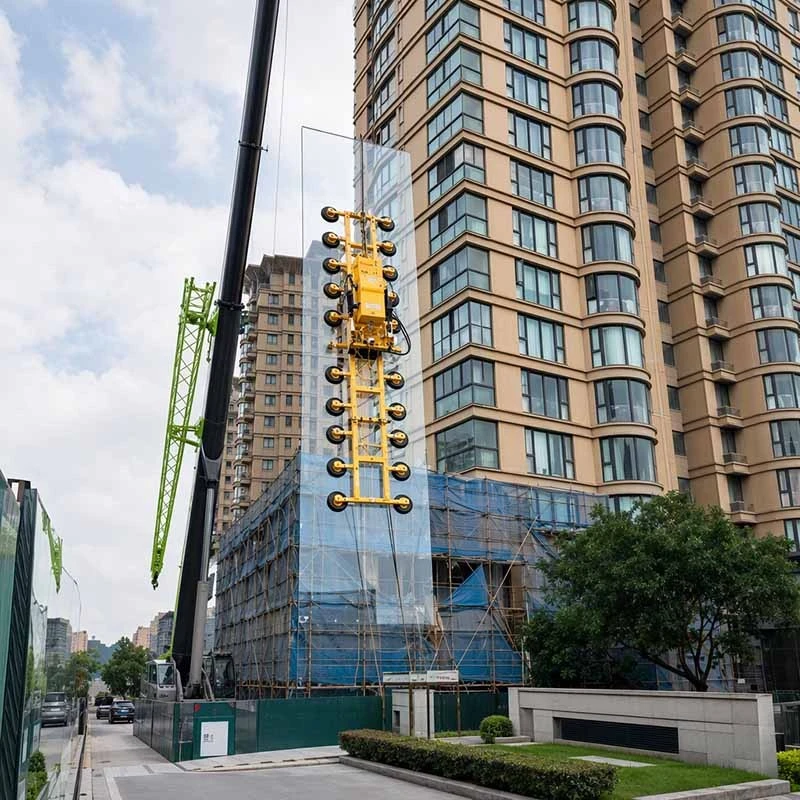
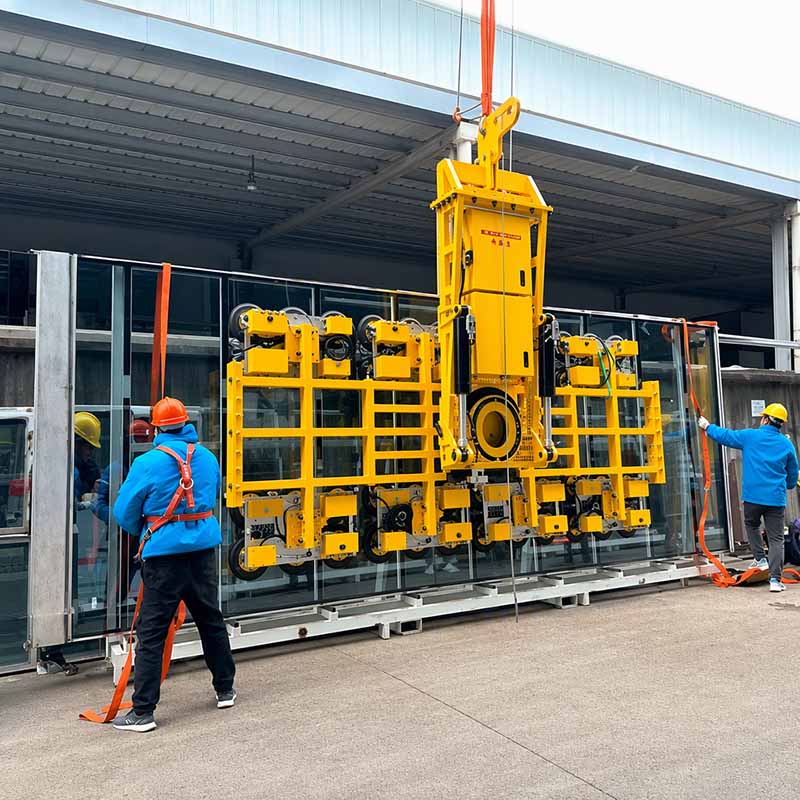
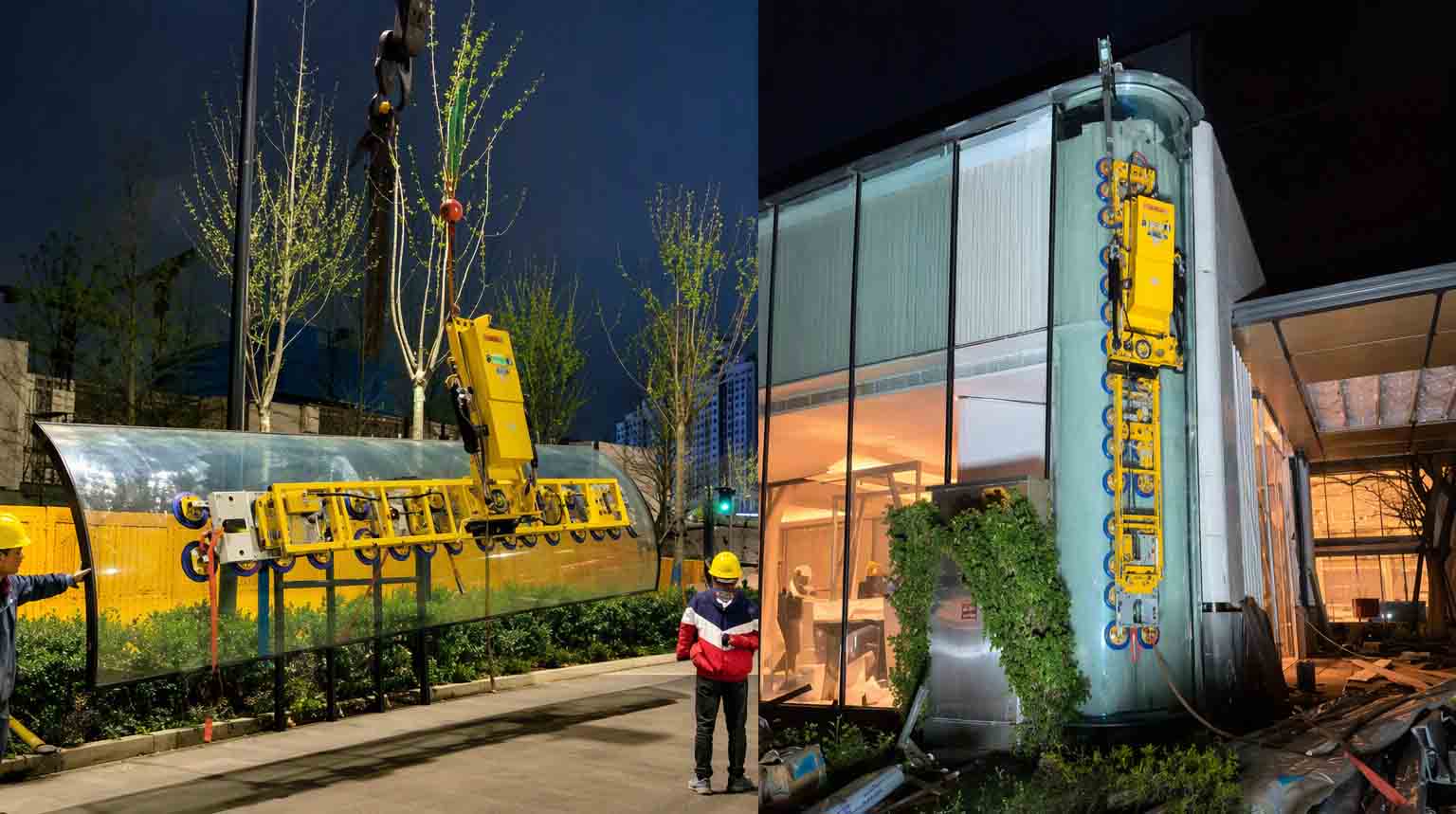
For handling large window units, curtain wall glass and façade panels from ground level, transport racks or installation platforms. Tilt and rotation functions support vertical placement at the opening.
Glass Processing Lines
Pneumatic and electric glass lifting equipment can be used at fixed stations for loading, cutting, edging, washing, waterjet processing and insulated-glass assembly. The handling motion is matched to the workstation layout.
Glass Storage and Internal Transfer
Glass vacuum lifters transfer panes between stillages, storage racks, production tables and packing areas. The cup frame is selected to maintain stable support across the actual panel size.
Curved Glass Handling
Adjustable curved-glass configurations are used for architectural curved glass and other non-flat glazing. The radius, usable suction area and required orientation change must be supplied for configuration.
Heavy Glass and Oversized Panels
Hydraulic glass lifting equipment is used for long, wide and heavy panels where powered turning and an extended modular frame are required. Typical work includes large façade lites and heavy glass assemblies.
Selection and Configuration
For glass lifting equipment for sale, provide the following information before a model is selected:
1. Glass type: monolithic, laminated, insulated, coated, curved or another construction.
2. Maximum and minimum glass dimensions, thickness and weight of each single pane.
3. Surface status at suction positions, including protective film, texture, coating and edge clearance.
4. Required handling motion: horizontal, vertical, inclined, 0‑90° tilt, 0‑360° rotation or combined movement sequence.
5. On-site lifting machinery: overhead crane, forklift, mobile crane, jib system or fixed production line.
6. Available power supply or compressed air pressure, alongside working clearance surrounding the glass panel.
This information is used to determine the cup pattern, beam length, vacuum arrangement, control method and rotation axis. A glass vacuum lifter should not be selected from nominal capacity alone.
FAQ
What capacity glass vacuum lifter is required?
The correct capacity is based on the glass mass and the complete handling condition, including glass dimensions, cup layout, centre of gravity, surface contact and orientation change. The final rated capacity must be confirmed for the actual pane and lifting sequence.
Can one glass lift handle both small and large glass?
An adjustable frame may cover a defined size range, but the cup spacing must remain suitable for each pane. A wide frame can leave cup positions too far apart on narrow glass. Separate cross arms or a dedicated smaller glass lifter may be required.
When should I choose electric or hydraulic glass vacuum lifters?
Electric systems are suitable for repeated controlled handling in the 600-1,000 kg reference range. Hydraulic systems are used for larger glass, longer frames and heavier loads requiring powered tilt and rotation. Hook height, clearance and work frequency must also be considered.
Can the glass lifting device handle curved glass?
Yes. Curved-glass models use adjustable cup arms to suit the required radius. Provide the inside or outside radius, glass dimensions, thickness, weight and required movement before configuration.
What must be checked before lifting glass?
Each glass lifter suction cup must be seated on a clean, dry and continuous surface. The required vacuum condition must be confirmed according to the operating procedure. Damaged glass, loose film or an uncertain seal condition requires evaluation before lifting.
Is pneumatic glass lifting equipment suitable for a production line?
Yes. The HP-QF series operates from a 0.6-0.8 MPa compressed-air supply and is suited to fixed glass-processing stations. Confirm air quality, pressure stability, lifting motion and workstation dimensions before selection.
Request a Configuration
Before making the quotation, please provide the size, weight, surface details of the glass, as well as the basic information such as the required inclination angle and moving method. Then, we can design the drawings for you based on these basic information and provide you with a professional and formal quotation.
Hot Tags: glass vacuum lifter (industrial), China glass vacuum lifter (industrial) manufacturers, suppliers, factory
Previous
No InformationYou Might Also Like

Send Inquiry