

Electric hoists are indispensable key lifting equipment in workshops, warehouses and factories, etc. This industrial lifting equipment can make material handling safer and more convenient, and reduce labor costs. To ensure the full utilization of the equipment's efficiency and the safety of the working environment, standard usage is the core prerequisite. The following will describe the key points of equipment usage, providing guidance for safe and standardized operations.
Operating Your Electric Hoist
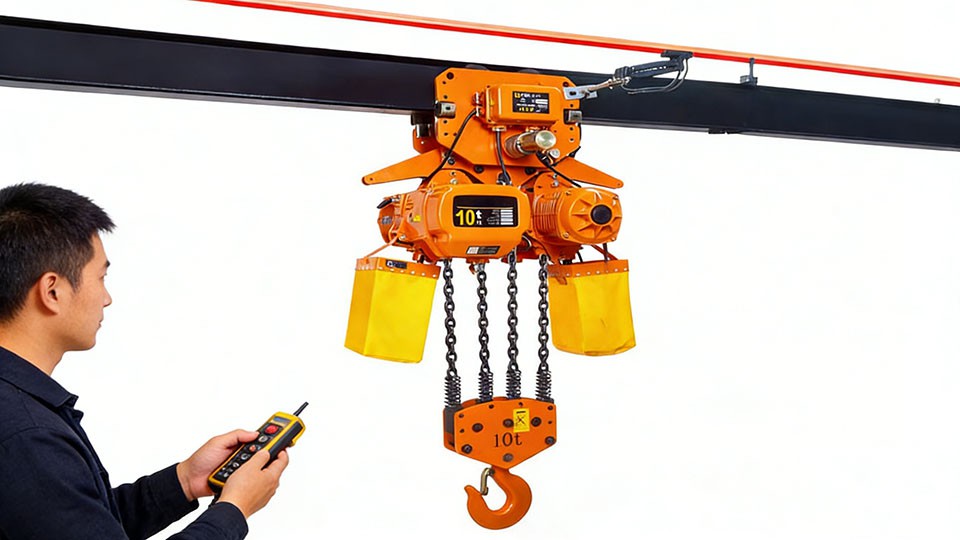
Using an electric chain hoist or wire rope hoist is fundamentally about control. Operation is typically managed via a pendant station or a wireless remote. The core functions are straightforward:
Lifting: Press the "UP" button to engage the motor. The hoist will raise the load smoothly. Modern models often feature variable speeds, allowing for a gentle start and precise final positioning.
Lowering: The "DOWN" button releases the brake and powers the motor in reverse to lower the load in a controlled manner. Never allow a load to free-fall.
Horizontal Movement (if equipped with a trolley): If your electric hoist is mounted on a trolley, separate buttons control its travel along the overhead crane beam. This allows you to move the load horizontally to its destination.
Pro Tip: Always keep the load directly under the hoist hook before lifting, to avoid dangerous swings.
Core Safety Guidelines
1. Always conduct a visual inspection before operation
Before each startup, a visual inspection must be completed. Check for any deformation of the hook, whether the chain or steel wire rope is twisted or damaged, and whether any components are loose. Also, confirm that there are no obstacles along the equipment's operation path.
2. Do not exceed the rated load
Each electric hoist is marked with the rated lifting capacity, which is a strict safety limit, not a reference value. Overloading is the main cause of equipment failures and safety accidents. When the load is unclear, it is necessary to weigh it first for confirmation.
3. Standardize the fixation of lifted items
Select qualified and matching lifting ropes to ensure that the load is evenly stressed and the fixation is firm. Before operation, make sure that the safety latch of the hook is fully closed to prevent the goods from slipping.
4. Stay away from suspended dangerous areas
Do not stand or pass under the suspended heavy objects. During operation, keep your hands and all body parts away from the areas that could cause injury, such as heavy objects, hooks, chains / steel wires.
5. Use safety devices correctly
The hoist's built-in limit switches and overload protection provide extra safety, but they can never replace proper, careful operation.

Chain Hoist vs. Wire Rope Hoist: How to Choose
There are more than one type of electric hoists. In general industry, the most common ones are electric chain hoists and electric wire rope hoists. There is also a type of European-style electric hoist, which is a more advanced model.
- Electric chain hoists: Suitable for scenarios with limited space and requiring durable and reliable heavy loads. The body is more compact, the clear height is small, and it has strong resistance to impact loads. The alloy steel chain is sturdy and strong, and only requires regular lubrication. It is a very practical general-purpose choice for warehouse lifting and processing workshops.
- Electric wire rope hoists: The advantages are smoother operation, faster lifting speed, and the ability to achieve a greater lifting height. They are commonly used in ordinary workshops and overhead cranes.
- European style electric hoists: They belong to high-end wire rope cranes and adopt a modular compact design. They have a high working level, up to M6, come with frequency conversion control, and have smoother and more precise lifting actions. They are mostly used in high-intensity and automated working environments.


Select The Appropriate Lifting Solution
When choosing an electric hoist, in addition to the rated load capacity, it is also necessary to consider the operation process, usage environment and safety standards. For models such as chain hoists and European-style hoists, select the appropriate one to make it more practical and have a higher cost-effectiveness. We specialize in customizing industrial lifting solutions. Please feel free to consult us, and we will help you achieve safe and efficient improvement in production efficiency.


