

In material handling operations in workshops, warehouses, factories and other scenarios, inefficient operation modes will directly increase the operational costs of enterprises. Manual handling methods not only result in slow operation rhythms but also pose certain safety risks. Gantry crane are commonly used equipment for material handling, and their use in conjunction with electric hoists can further optimize the operation process and solve practical problems in the material handling link of enterprises.
1. Addressing Issues of Handling Efficiency and Labor Costs
Using manual chain blocks or pure manpower to complete heavy-duty and high-frequency lifting operations is prone to causing bottlenecks in the production process. Workers face high labor intensity, are prone to fatigue, and the daily workload is also affected.
Electric hoists are equipped with power lifting functions. Operators can complete lifting operations for goods ranging from 500 kilograms to several tons through button control boxes or remote controllers, and the operation process is labor-saving and smooth. The application of this equipment can improve the efficiency of material turnover and accelerate the overall production or service process.
2. Adapting to Restricted Operating Spaces and Flexible Operation Needs
Fixed overhead cranes require high upfront investment and supporting fixed infrastructure. Some enterprises need to carry out lifting operations in multiple areas but lack the conditions to install fixed tracks, making conventional equipment unable to meet usage needs.
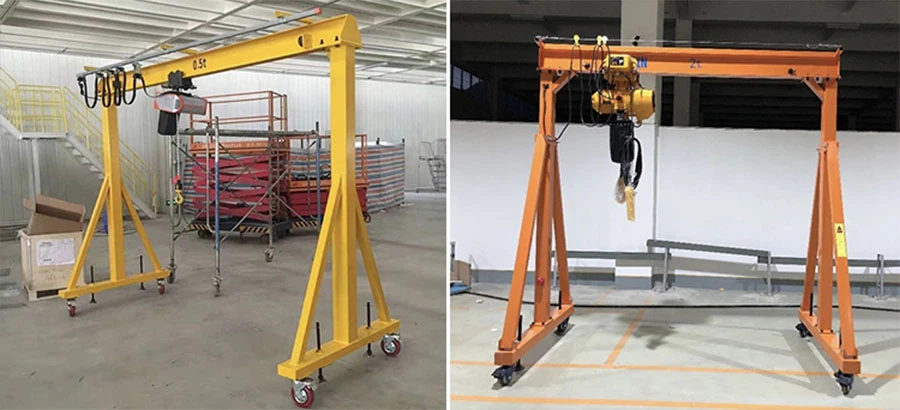
Mobile gantry cranes have good flexibility. The span of commercially available models can be adjusted within the range of 2 to 12 meters, and the lifting height is 1 to 10 meters, which can adapt to different operating space sizes. Among them, portable models, some foldable ones with a total weight of only 25 kilograms, can be moved by 1 to 2 workers. They can be applied to loading and unloading areas, beside machine tools, temporary operation units and other scenarios. High-altitude lifting operations can be realized without investing in fixed infrastructure costs.
3. Reducing Operational Safety Risks and Physical Wear of Workers
Manual material handling is a common cause of workplace injuries in workshops. Muscle strains, joint sprains, and accidents caused by falling goods occur from time to time.
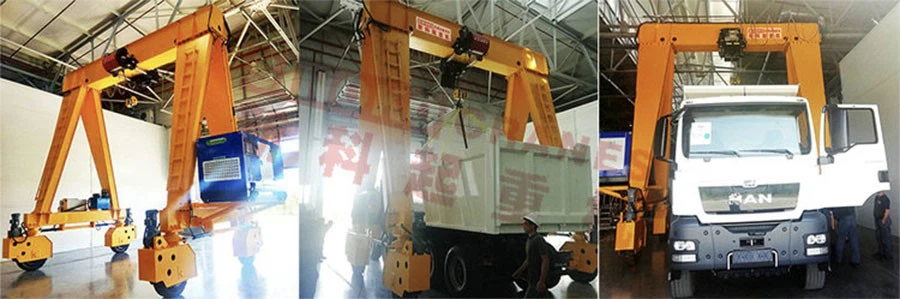
The gantry crane system with electric hoists can reduce the physical burden on workers. The frame can stably bear the weight of goods, and the lifting operation is completed by the electric hoist; the electric hoist is equipped with a braking device, and the crane frame is equipped with locking casters, which can ensure the stability of goods during movement and positioning. The use of this equipment can optimize the safety of the operating environment, reduce the risk of work injury compensation, and comply with relevant safety regulations.
4. Adapting to Diversified Operating Scenarios
Enterprises have different needs for different operational tasks, such as lifting engine blocks, positioning entire pallets of parts, etc. Equipment of a single specification is difficult to meet the needs of various operations.
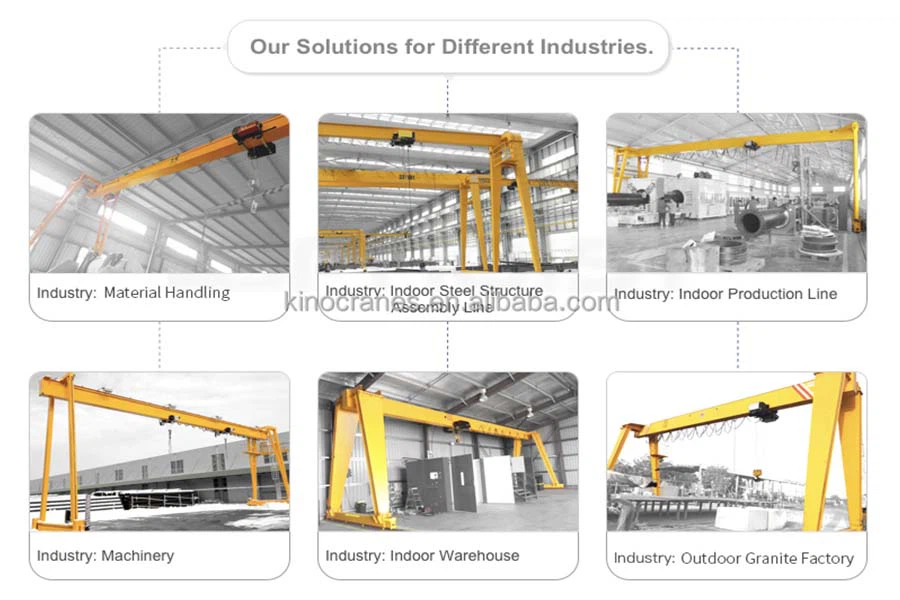
The combination of gantry cranes and electric hoist has strong adaptability. The crossbeams and outriggers of the gantry crane frame can be adjusted to adapt to goods of different sizes; electric hoists can be replaced according to needs, with industrial-grade models ranging from 0.5 tons to 10 tons and larger tonnages available. They can be applied to various operating scenarios such as auto repair, mechanical maintenance, warehouse loading and unloading, and workshop assembly.
5. Core Considerations for Enterprise Equipment Selection
If you need gantry cranes with electric hoists, you should focus on the following factors:
- Lifting capacity: This parameter is of utmost importance before purchasing. You need to determine the maximum tonnage and maximum size of the goods to be lifted, which directly affects the load-bearing capacity and span of your equipment.
- Space limitations: First, measure the available width, length, height, etc. of the workshop or outdoor area, and then select the equipment based on the measurement data.
- Usage frequency: Estimate the usage frequency of the gantry crane for the work, and select the corresponding main beam, legs' materials, and also choose the corresponding level of electric hoist according to the usage frequency.
- Power supply selection: Confirm the power supply compatibility at the work location. Generally, electric hoists are applicable to 380V/50Hz or 220V industrial power supply. Remote control can be selected with a remote controller or driver's cabin control.
Equipping with gantry cranes with electric hoist is an optimized investment for the material handling process of enterprises, which can solve practical problems such as low efficiency, limited space, and high safety risks. By combining their own operational pain points with the core characteristics of the equipment, such as adjustable span, customized load capacity, and electric precise control, enterprises can gradually recover the investment cost through the stable performance of the equipment and improve operational efficiency.


