

1. Introduction: What Are Sheaves in Crane Operations?
When people think of crane components, hoists, beams and heavy-duty hooks are usually what come to mind. But how often do they think about crane sheaves? These grooved wheels look simple, but they're unsung heroes for crane safety and efficient operations.
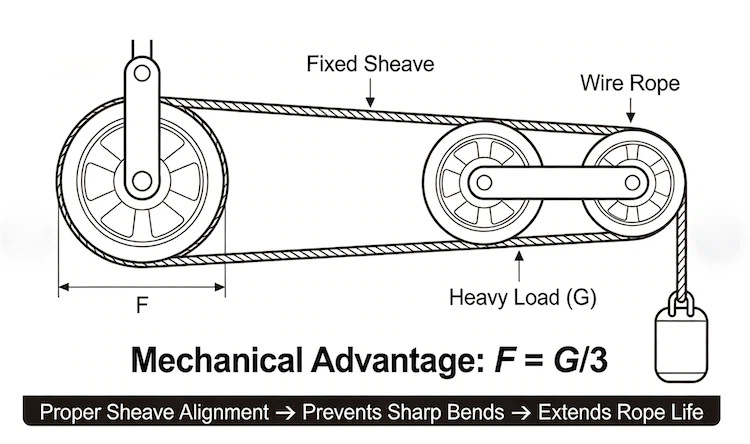
Crane sheaves are basically precision-engineered pulleys. They guide and support wire ropes in a crane pulley system, cutting down friction and spreading load stress evenly. This keeps lifting smooth and helps extend the wire rope's lifespan.


2. Why Sheaves Matter for Crane Efficiency and Safety
Crane sheaves are critical for both performance and protection. Here's why:
• Mechanical Advantage: Sheaves form a pulley system to boost lifting power. Cranes handle heavier loads without overworking the motor.
• Wire Rope Protection: Sheaves aligned right prevent wire ropes from sharp bends and excessive wear-this directly extends rope life.
• Safety Assurance: Worn/damaged sheaves cause rope slippage or even snapping, posing big risks to crane safety. Regular inspection avoids these problems.
3. Types of Sheaves in Cranes
Not all crane sheaves are the same. The right type depends on your crane's load capacity and environment:
• Steel Sheaves: Good for heavy-duty work-super strong and tough, lasts long.
• Cast Iron Sheaves: Budget-friendly option for light to medium crane jobs. Wear resistance is solid.
• U-Groove vs. V-Groove Sheaves: U-groove is usually for standard wire ropes (8–60 mm). V-groove works better with smaller cables (under 10 mm).
Pick the right sheave type, and your crane pulley system will work better-plus, the sheave grooves won't wear out as fast.

4. Crane Sheave Maintenance: Key Tips
Keeping your crane sheaves maintained proactively isn't optional-it's a must for safe operations. Work these checks into your regular routine:
• Visual Checks: Do a monthly look-over for cracks, chips, or lopsided wear on the sheave grooves.
• Groove Measurement: Grab a gauge tool to check groove depth. If the wear's more than 10% of the rope's diameter, replace the sheave right away.
• Bearing Lubrication: Make sure the bearings spin smoothly-this stops friction from causing breakdowns.
• Rope Fit: Always pair sheave grooves with the right wire rope size. If they don't match, wear will speed up fast.
Also, keep a log of your sheave inspections. This lets you track how wear progresses and plan to replace sheaves before they go bad.
5. Common Problems with Sheaves in Crane Operations
Even robust crane sheaves face issues over time:
• Groove Wear: Constant friction degrades grooves, leading to rope damage. Address this early to protect the wire rope lifespan.
• Misalignment: Sheaves out of alignment put uneven stress on the rope, cutting crane efficiency.
• Bearing Failure: Seized bearings add resistance during operation, driving up energy costs and safety risks.
Ignoring these problems hurts crane safety, and usually means emergency sheave replacement.
6. Conclusion: Why Sheaves Are Essential for Crane Operations
Crane sheaves aren't big parts, but they matter a lot for lifting jobs. They're vital to keeping your equipment going longer-helping boost mechanical advantage, and making sure crane safety stays solid.
You gotta prioritize regular sheave maintenance and replacing them when they're worn. Do that, and you won't have work getting held up, plus the crane will run at its top performance. And one more thing: a well-kept crane pulley system isn't just about working efficiently-it's about making sure everyone stays safe.

If you wish to purchase crane-related components, please contact us immediately. Our crane parts come with absolute quality assurance.


