




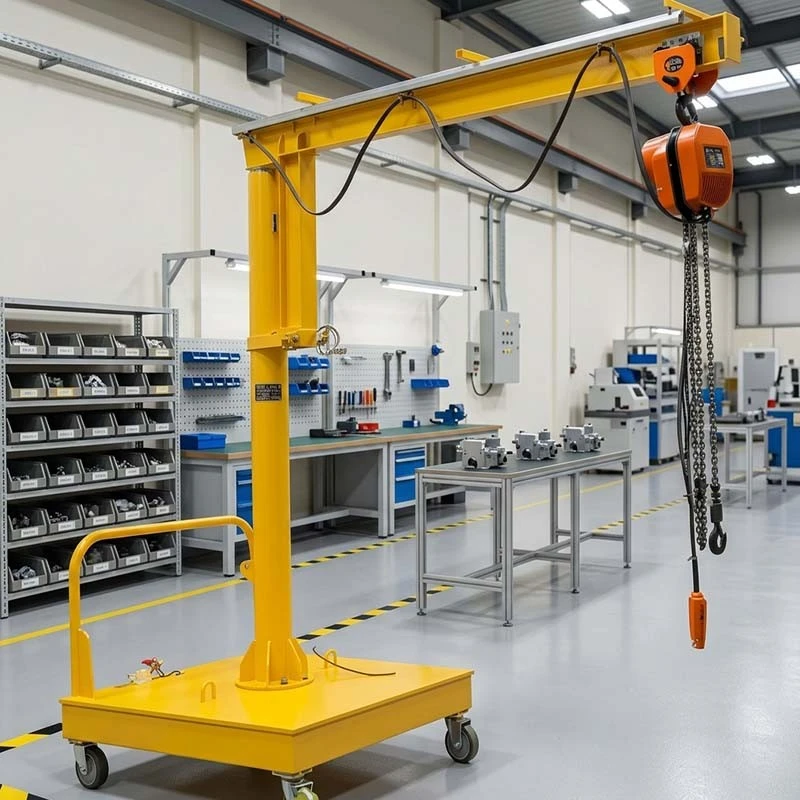
Heavy Duty Portable Jib Cranes
Rated capacity:500–2,000 kg
Boom span:8–12 m
Under-boom height:8–20 m
Boom rotation:Up to 360°
Hoist interface:Manual, electric chain or pneumatic
Mobile Lifting Without a Permanent Foundation
Heavy duty portable jib cranes provide local lifting coverage where a fixed column-mounted or wall-mounted crane is not practical. The crane combines a structural-steel mast, boom, slewing assembly and counterweighted base in one relocatable unit. It can be transferred between work cells by forklift, then used for repeated lifting, positioning and machine-service work without floor anchoring.
This arrangement is intended for facilities with changing production layouts, leased premises, isolated maintenance stations or temporary handling requirements. Mobility does not reduce the need for engineering control: rated load, boom outreach, base footprint, counterweight and floor capacity must be evaluated as one system.
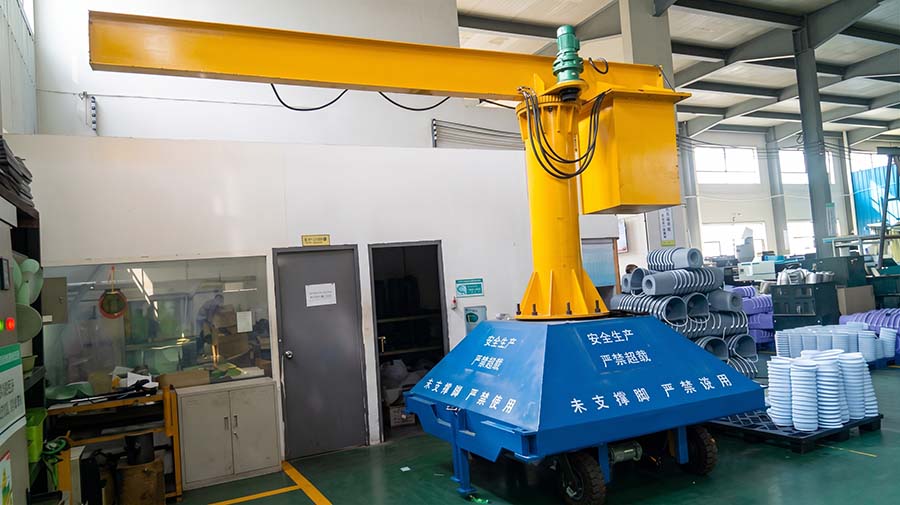
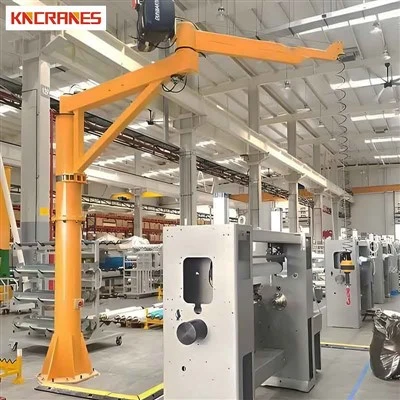
Heavy-Duty Portable Jib Crane Configuration
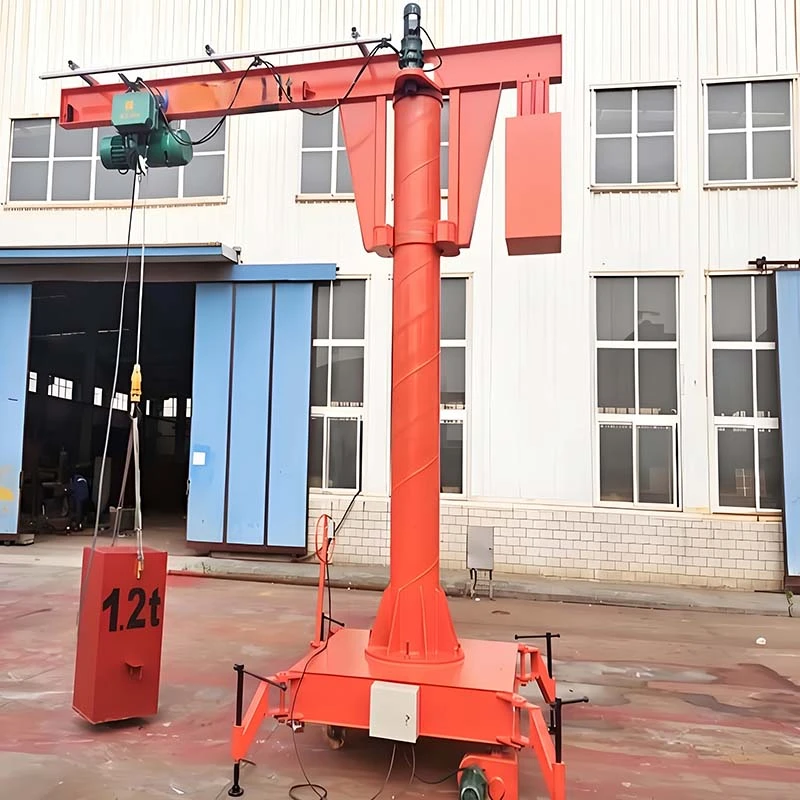
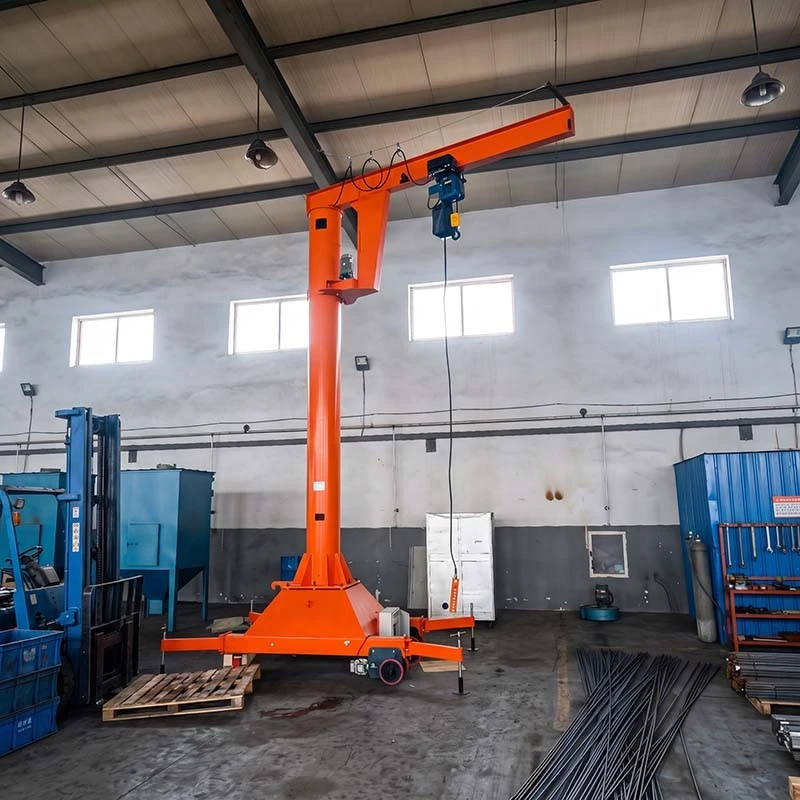
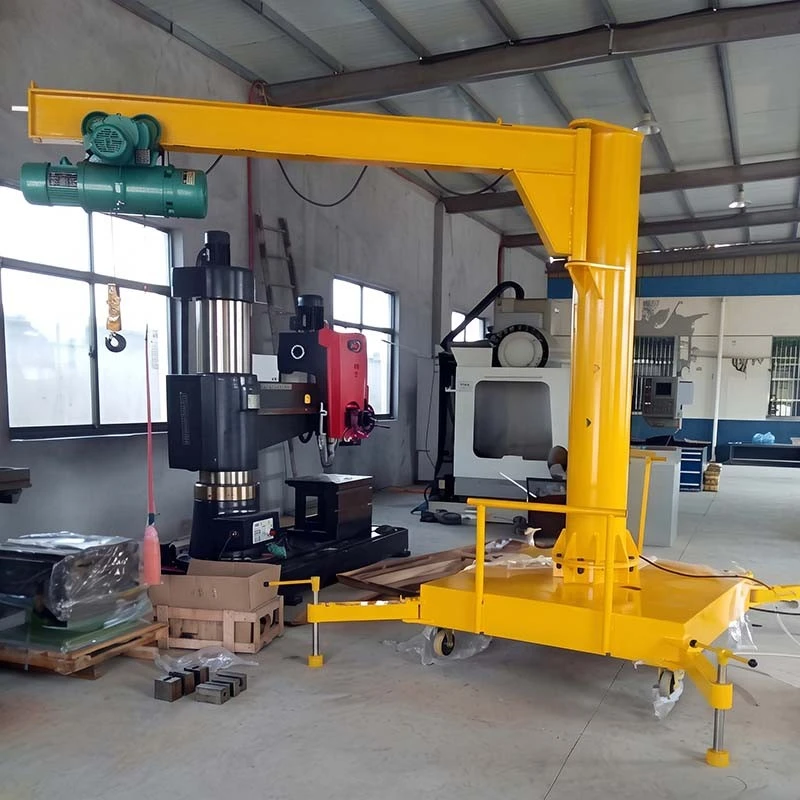
The base is designed to resist the overturning moment generated by the lifted load and boom outreach. Integrated four-way fork pockets allow the unloaded crane to be picked from more than one direction. A full-rotation slewing assembly supports load positioning within the available work envelope. The boom carries a trolley and a customer-specified lifting device.
Structural and Operating Features
- Welded structural-steel mast, boom and weighted base
- Counterweighted freestanding base; no permanent floor anchors required for the standard portable arrangement
- Four-way forklift pockets for relocation when the crane is unloaded
- 360° manual boom rotation for workstation coverage
- Bearing-supported slewing connection for controlled boom movement
- Manual push trolley or powered trolley option, subject to selected configuration
- Compatible with manual, electric chain or pneumatic hoists, subject to duty and headroom review
- Hoist retaining device and end stops on the boom trolley path
- Finish and electrical arrangement selectable to suit indoor operating conditions

Technical Parameters
|
Parameter |
Standard Heavy-Duty Portable Range |
Engineering Note |
|
Rated capacity |
500–2,000 kg |
Includes the suspended load only. Hoist, trolley, below-hook devices and rigging must be accounted for in selection. |
|
Boom span |
8–12 m |
Longer outreach increases overturning moment and may require a larger base or reduced rated capacity. |
|
Under-boom height |
8–20 m |
Final height is determined by hook travel, hoist headroom and required load clearance. |
|
Boom rotation |
Up to 360° |
Rotation must be kept clear of obstructions, personnel routes and utility lines. |
|
Base concept |
Counterweighted portable base |
The crane is positioned directly on a verified, level floor. |
|
Relocation method |
Four-way fork pockets |
The crane must be unloaded and the boom secured before transport. |
|
Hoist interface |
Manual, electric chain or pneumatic |
Hoist selection must match the rated capacity and duty cycle. |
|
Operating environment |
Indoor industrial use |
Outdoor use requires project-specific wind, corrosion and parking review. |
Important: The table defines a typical configuration envelope, not a universal rating. Final dimensions, dead weight, counterweight, floor bearing requirement and hoist specification shall be confirmed against the selected load chart and site conditions.
Where a Mobile Jib Crane Fits
A heavy duty portable jib crane is used where a load must be lifted repeatedly within a defined radius but the point of use may change. Typical duties include:
- Feeding fixtures, presses, machining centres and assembly benches
- Removing gearboxes, pumps, motors and tooling during maintenance
- Positioning fabricated parts for welding, fitting or inspection
- Supporting packaging, palletizing and rework stations
- Providing intermittent lifting coverage during line changes or facility expansion
It is not a substitute for an overhead crane where loads must travel over long distances, cross multiple bays or remain suspended during plant-wide transport.
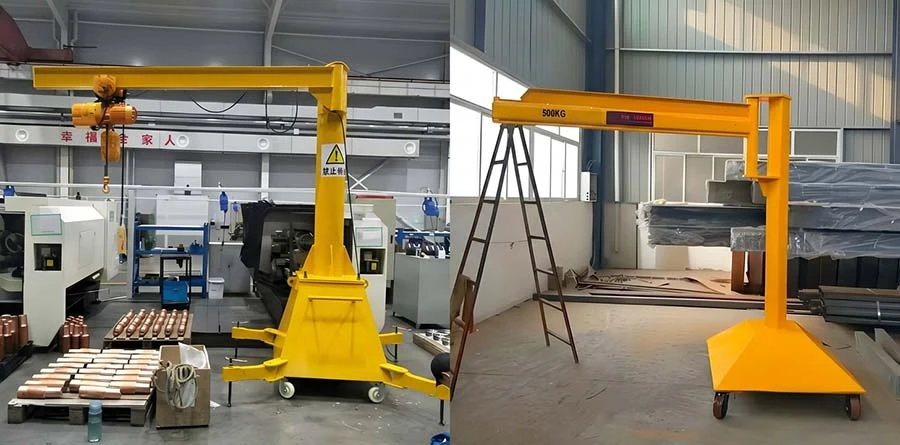
Select the Crane Around the Load Path
The correct heavy duty portable jib crane is selected from the load path rather than rated capacity alone.
1. Establish the lifted load
Use the heaviest complete lifted assembly: workpiece, gripper or lifting beam, hooks, slings and any below-hook device. Do not select the crane from the workpiece weight alone.
2. Define the working radius
Measure the distance from the mast centreline to the farthest intended hook position. The largest bending and overturning effects occur at maximum outreach. A shorter boom may provide a more stable and economical configuration when the full span is not required.
3. Confirm floor and access conditions
The counterweighted base transfers concentrated load to the floor. Verify slab capacity, levelness, joint locations, pits, drains and the forklift travel route before specifying the crane. The base must rest fully on a sound, level surface during lifting.
4. Match the hoist and duty cycle
Select the hoist by capacity, lift height, lifting speed, control method and expected starts per hour. Hoist duty classification and electrical supply must be reviewed separately from the jib structure.
Operating Boundaries and Safety Requirements
Portable jib cranes must be moved only when unloaded. The hook, trolley and boom shall be secured before forklift handling. Lifting is permitted only with the base fully supported on the floor; use of casters, improvised shims or partial support during a lift is not permitted.
The operator must keep the load within the rated capacity, avoid side pulling, maintain visibility of the load path and prevent personnel from entering the suspended-load area. Any modification to the boom, counterweight, hoist, base or fork pockets requires engineering review because it can alter stability and rated performance.
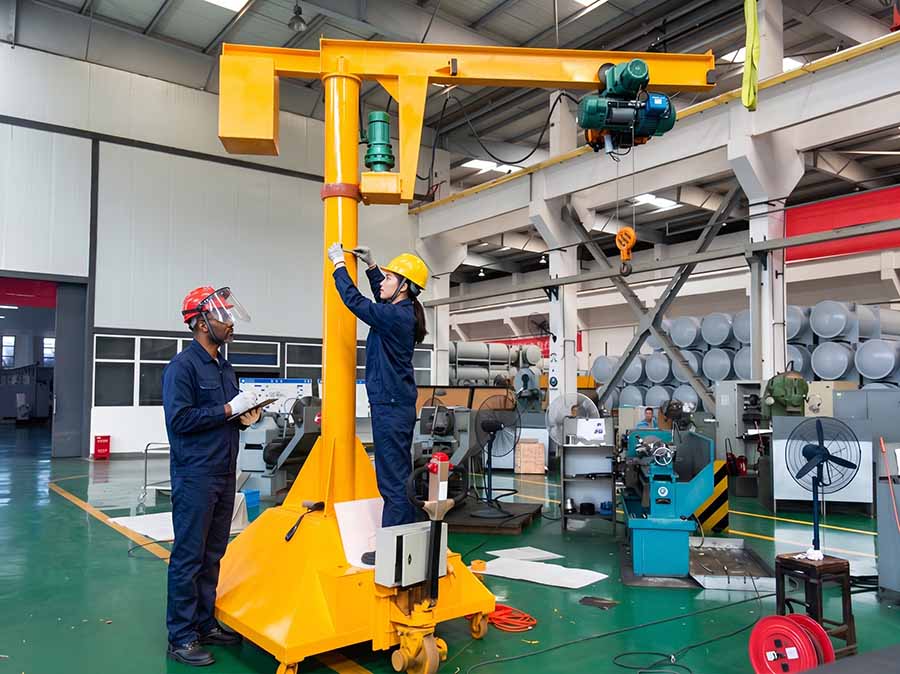
Frequently Asked Questions
What makes a portable jib crane suitable for heavy-duty use?
Heavy-duty suitability depends on the rated capacity, boom span, counterweight and structural design working together. A higher capacity or longer boom produces greater overturning demand, so the base and floor interface must be selected for the exact load chart rather than by capacity alone.
Can a heavy duty portable jib crane be used without floor anchors?
Yes, a counterweighted portable-base configuration can operate without permanent floor anchors when it is used within its approved rating on a verified, level floor. The absence of anchors does not remove the requirement to confirm floor bearing capacity and base support.
Can the crane be moved while carrying a load?
No. The crane must be unloaded before relocation. The boom and hook assembly should be secured, and movement must be completed by a suitably rated forklift using the designated fork pockets.
What capacity should be selected?
Select capacity from the total suspended load, including the workpiece, hoist, trolley, rigging and below-hook equipment where applicable. The required boom span and lift height must then be checked against the corresponding configuration rating.
Does 360° rotation mean the hook can work at every point around the mast?
The boom can rotate through its designed range, up to 360° in an unobstructed installation. Actual usable coverage depends on the base footprint, nearby equipment, building columns, service lines and safe operator access.
Which hoists can be fitted to a portable jib crane?
Manual chain, electric chain and pneumatic hoists can be considered when their capacity, suspension method, headroom, duty cycle and power supply are compatible with the selected jib configuration. Final approval should be based on the complete lifting assembly.
Is a portable jib crane appropriate for outdoor work?
Only after a project-specific assessment. Wind exposure, surface condition, corrosion protection, parking position and access control change the stability requirements. Standard indoor portable configurations should not be assumed suitable for outdoor lifting.
Hot Tags: heavy duty portable jib cranes, China heavy duty portable jib cranes manufacturers, suppliers, factory, 1 Ton Electric Hoist, Column Mounted Jib Crane, Jib Crane By Types, Pillar Mounted Jib Crane, Wall Bracket Jib Crane, Wall Mounted Jib Crane
Previous
Pillar Mounted Jib CraneYou Might Also Like




Send Inquiry